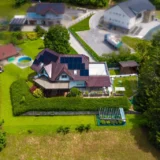
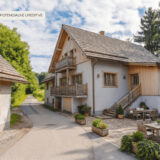
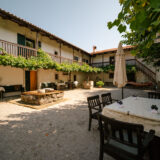
You have found a house you love. The location suits you, and the price feels right. Then you discover that the driveway crosses your neighbour’s land. Will you still be able to use it freely once you own the property? The answer depends on whether a legally established right of way secures access.
An easement is a right over someone else’s property that permits a specific use or requires the owner to refrain from certain actions. It does not transfer ownership. In Slovenia, the main rules governing these rights are set out in the Property Code (Stvarnopravni zakonik, or SPZ).
Before buying, check who benefits from the right, what it allows, and how it could affect your plans.
What Is the Difference Between a Property Easement and a Personal Servitude?
Property Easements
A property easement allows the owner of one property to carry out specific activities on another person’s land for the benefit of their own property, or to require the other owner to refrain from certain actions. Article 213 of the Slovenian Property Code defines this right.
Two properties are involved:
- The dominant property benefits from the easement, for example through a right of access.
- The servient property is subject to the easement, for example where a driveway crosses its land.
The owner of the dominant property may use the route within the agreed or legally established scope, while the owner of the servient property must allow that use.
A positive easement permits activities on another person’s land, such as walking or driving across it. A negative easement requires the owner to refrain from certain activities they would otherwise be entitled to carry out.
A right of way does not automatically include permission to park. Always check the precise terms of the right.
Personal Servitudes
A personal servitude benefits a specific holder. Under Slovenian law, these include usufruct, the right of use, and the right of habitation.
Usufruct allows its holder to use another person’s property and enjoy its benefits while preserving its substance. A right of use is limited to the holder’s needs, while a right of habitation allows the holder and their family to use a dwelling or part of it for their housing needs.
Before buying, check which rooms or areas the holder is entitled to use, how long the right lasts, and whether it could affect your ability to move in.

Does an Easement Remain in Place After a Sale?
A property easement is attached to the property and benefits its owner, whoever that may be. A sale alone does not bring it to an end.
If you buy a house with an established right of access across a neighbouring plot, you may continue to exercise that right within its defined scope. Equally, a new owner of the servient property must respect the existing easement.
Check both the rights that benefit your future home and those that allow others to use your land.
How Is an Easement Created?
A property easement may arise through a legal transaction, by operation of law, or through a decision by a competent authority.
Establishing an easement by agreement requires a valid legal transaction, consent to registration, and an entry in the Land Register. The agreement should clearly identify both properties, define the scope of the right, and specify any compensation. It is also sensible to agree on maintenance responsibilities.
Where an easement is established by a decision, the relevant court judgment or administrative decision must have become final.
What Is Acquisition by Prescription?
A property easement may also arise through long-term use, known as prescription. Under Slovenian law, this may occur after ten years of use in good faith, or after twenty years of use without objection from the owner of the servient property.
However, long-term use alone is not enough. An easement cannot be acquired by prescription if the owner allowed the use only on a revocable basis, or if the right was exercised through force, deception, or abuse of trust.
A statement such as “we have used this path for decades” therefore does not, by itself, establish a right of way. You need to check how long the route has been used, under what circumstances, and what evidence supports the claim.

Where Can You Check the Existence and Scope of a Right?
Start with an up-to-date Land Register extract, available through Slovenia’s e-Sodstvo portal. Read the wording of the entry and, where necessary, the document on which it is based. If the right applies to only part of a plot, check the precise description of that area.
The area covered by an easement may also be recorded in the cadastre. However, the absence of a mapped area does not, in itself, mean that no right exists.
Compare the documents with the conditions on site, including the route and width of the driveway, fences, gates, and any other potential obstacles. A visible path is not proof of legally secured access.
How May an Easement Be Used, and Who Pays the Costs?
An easement must be exercised in a way that places the least possible burden on the servient property. Its use must remain within the defined terms and scope of the right.
As a general rule, the owner of the dominant property pays the costs of work or maintenance necessary to exercise the easement. If the owner of the servient property also benefits, the costs are shared in proportion to the benefit each receives.
For a right of way, clarify who is responsible for snow clearance, drainage, and repairs, and how the costs will be divided.
If someone unjustifiably obstructs the use of an easement, the rights holder may bring a legal action to have the interference stopped. The documents and circumstances of the individual case are important, so conclusions drawn from one court case cannot automatically be applied to another.
When Can an Easement End?
A property easement may end through a legal transaction, a decision by a competent authority, or by operation of law. Ending it by mutual agreement requires an appropriate agreement and removal of the entry from the Land Register.
The owner of the servient property may seek a court order to terminate the easement if it no longer serves a useful purpose for the dominant property, or if the circumstances in which it was established have changed significantly.
Slovenian law also provides for an easement to end where:
- The owner objects to its use, and the rights holder does not exercise the right for three consecutive years.
- The right remains unused for the period required for acquisition by prescription.
- The dominant or servient property is destroyed.
- Both properties come into the ownership of the same person.
Whether a property easement has ended therefore requires careful consideration of the relevant conditions. A wish for greater privacy does not, on its own, justify blocking an existing right of way.
What Should You Check Before Buying?
Before signing the purchase agreement, clarify the following:
- Who benefits from the right, and which property is subject to it?
- What does it permit: walking, driving, utility installations, or living in the property?
- Where does it apply, and what is its scope?
- Is it compatible with your plans for access, parking, and moving in?
- How are maintenance responsibilities and costs allocated?
- Do the documents reflect the conditions on site?
Working through these questions will help you understand how you will be able to use your future home and identify potential complications before committing to the purchase.
Buying or Selling a Property?
No one wants unexpected complications. That is why we pay close attention to every detail throughout the property transaction, from individual entries in the Land Register to their practical implications for the use of the property.
Our thorough approach gives you reliable support at every stage, helping you make a confident, informed decision. Call us on +386 40 626 131 or email tajnistvo@bazarealestate.com.
If you’re looking for a property, we invite you to explore our property listings.
This article provides general information about Slovenian law. The assessment of an individual case depends on the relevant documents and circumstances.
Official Sources
- Slovenian Property Code (Stvarnopravni zakonik) — PISRS
- Slovenian Land Register Act (Zakon o zemljiški knjigi) — PISRS
- Land Register — Judiciary of the Republic of Slovenia
- Real Estate Cadastre — Surveying and Mapping Authority of the Republic of Slovenia (GURS)