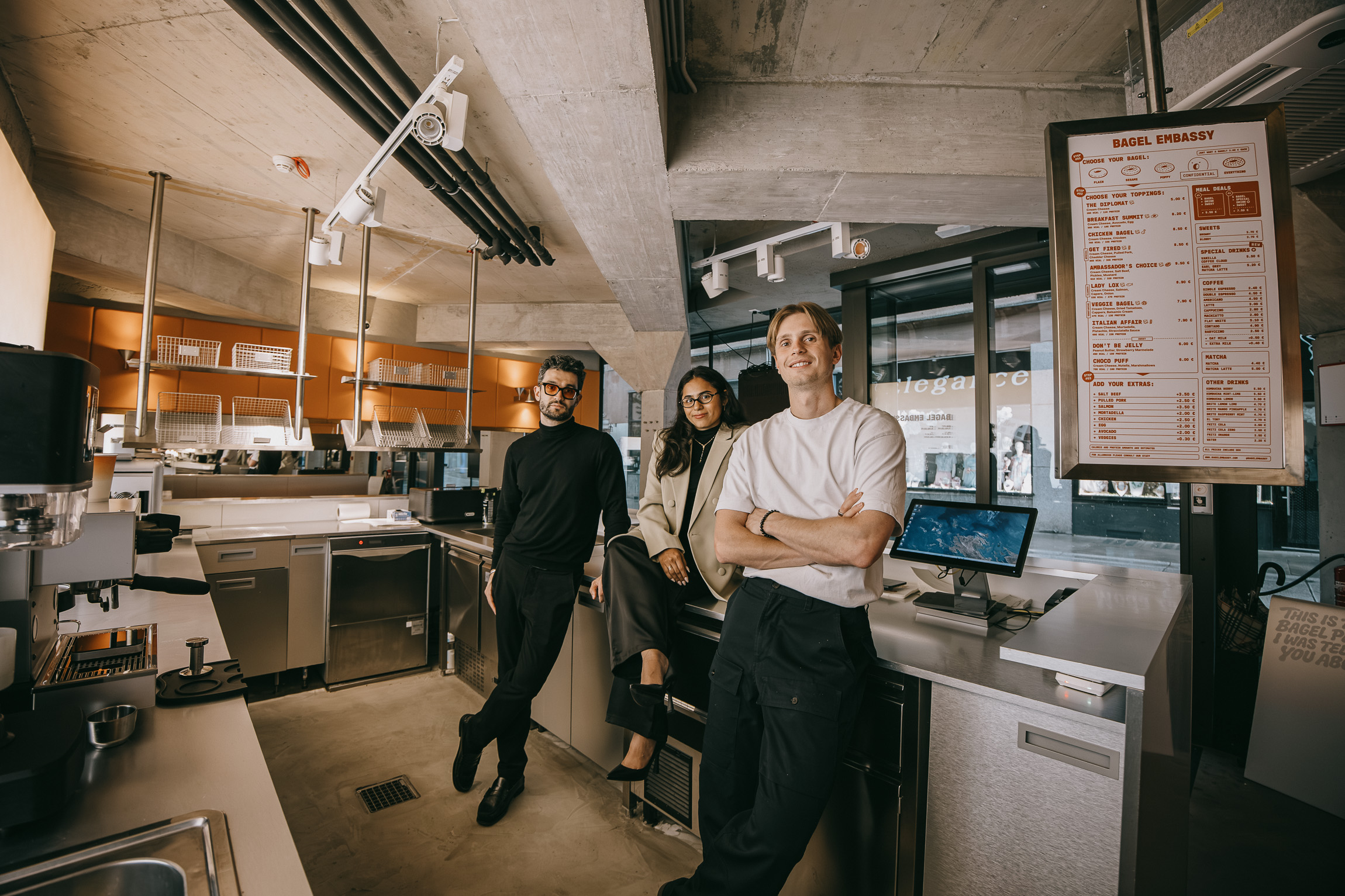
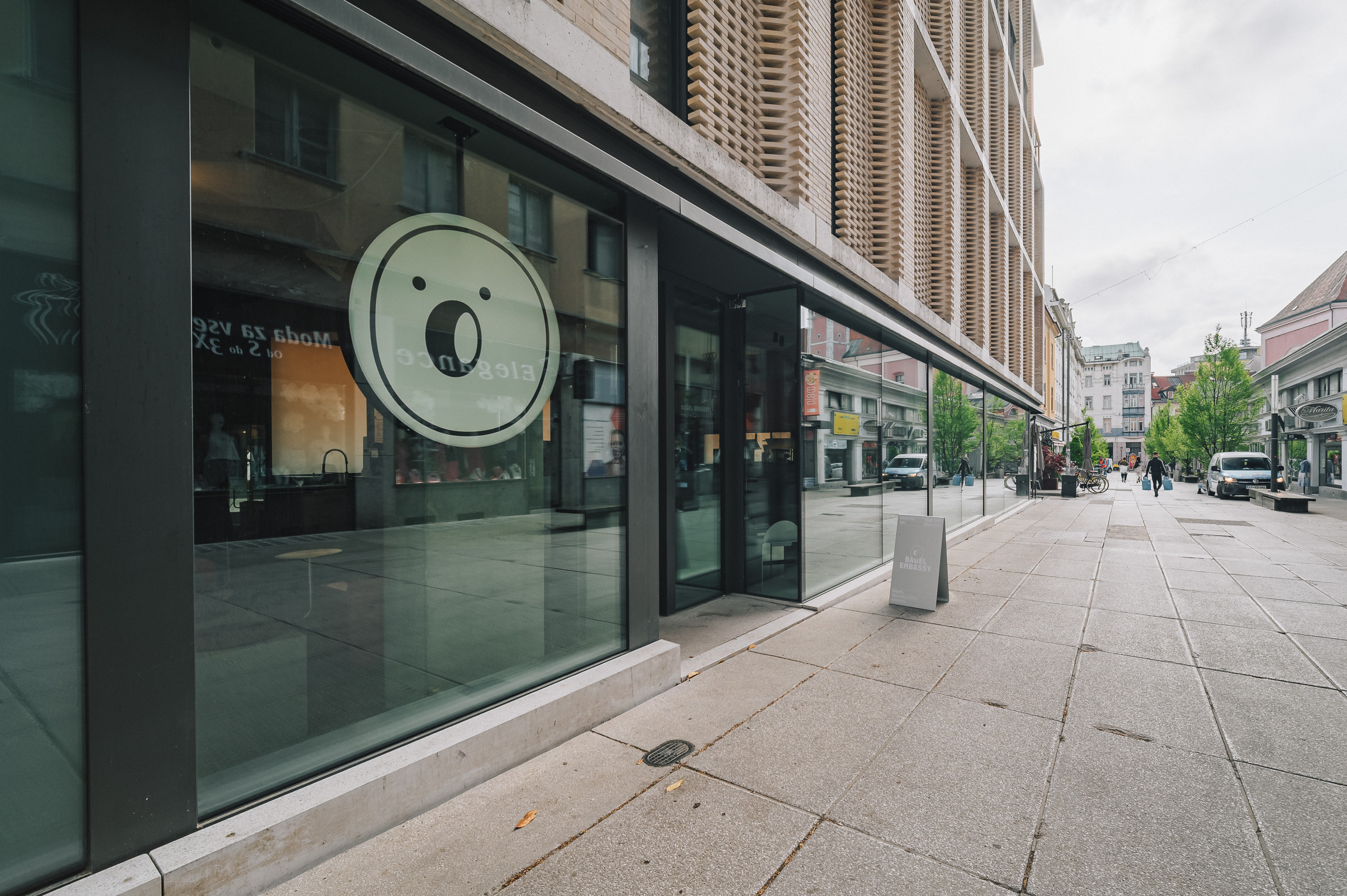
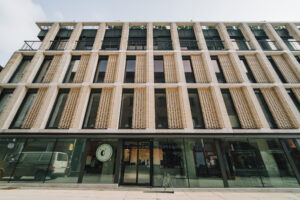
At 6 Nazor Street, an urban concept has come to life that goes beyond the traditional catering framework. Bagel Embassy is the latest project by three friends – Tamir Morris Potokar Gray, Žan Aleksander Božič and Alexandre Martinez – who are united by a passion for bagels (round bread rolls with a hole in the middle), speciality coffee and design. They met in London, where they lived, studied and worked, and it was there that the idea for this space took shape, which they have now brought to life in Ljubljana.
The Bagel Embassy combines delicious food, speciality coffee and thoughtful design with a focus on community, creating a space for meeting, exchanging ideas and experiencing the daily pulse of the city.
How did the idea for Bagel Embassy come about, and why bagels in particular?
The idea came about quite organically – from our everyday life in London. Bagel shops were our favourite place for breakfast or lunch, a sort of ‘go-to’ spot where you could always get good food and a great atmosphere.
That’s actually where Žan, Alex and I met – on a plane, in fact – and we later realised we had a very similar way of thinking and approach to food, space and culture.
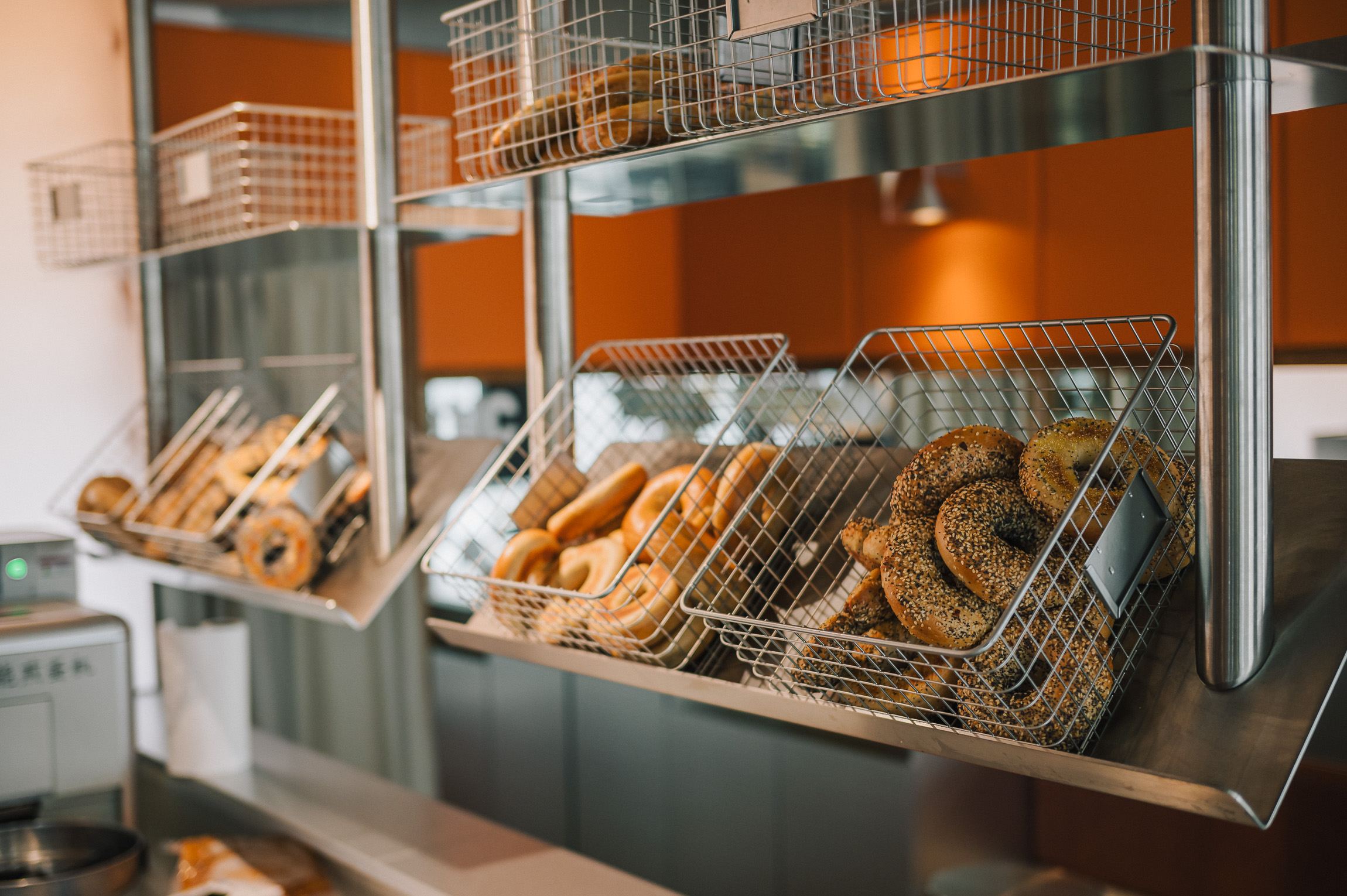
When we returned to Ljubljana, we were genuinely surprised to find that there wasn’t a single proper bagel shop here. I’m not talking about a ‘bagel sandwich’, but about the whole culture behind it. The bagel has over 400 years of history; it’s an artisanal product with a very clear identity. There’s something almost cult-like about it – and that’s what we wanted to bring here.
Did you plan from the outset that this would be a space intended for more than just food?
Absolutely. Food was the starting point, but never the end goal.
We drew inspiration from cities where cafés aren’t just places to have a coffee but become little communities – with morning DJ sets, events and spontaneous get-togethers. We felt this spirit was missing in Ljubljana, yet at the same time we sensed the city was ready for it.
As we live this way of life ourselves, it seemed perfectly natural to us to bring it into our space. That’s why today, for us, it’s not just about bagels and coffee, but about the whole experience – from music events to morning ‘raves’, which have shown that people want different ways of socialising.
Our aim is for people to feel at home here, to stay a little longer and to come back – not just for the food, but for the atmosphere.
How did you go about designing an interior that stands out from traditional bagel shops?
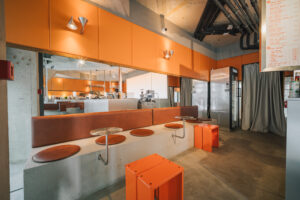
We developed the interior in collaboration with Studio Yze, whose approach is very much in line with our own – timeless, clean, yet warm.
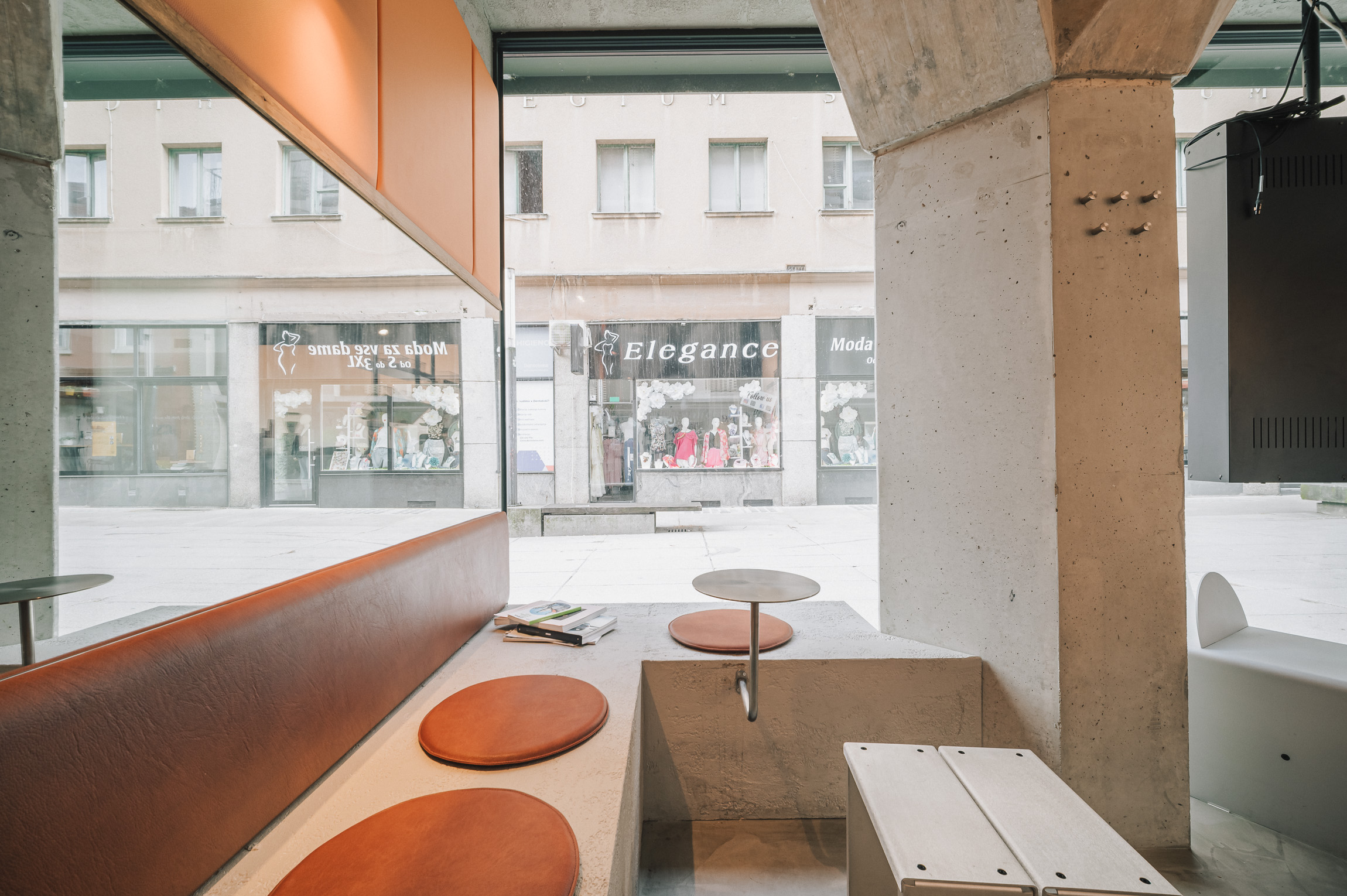
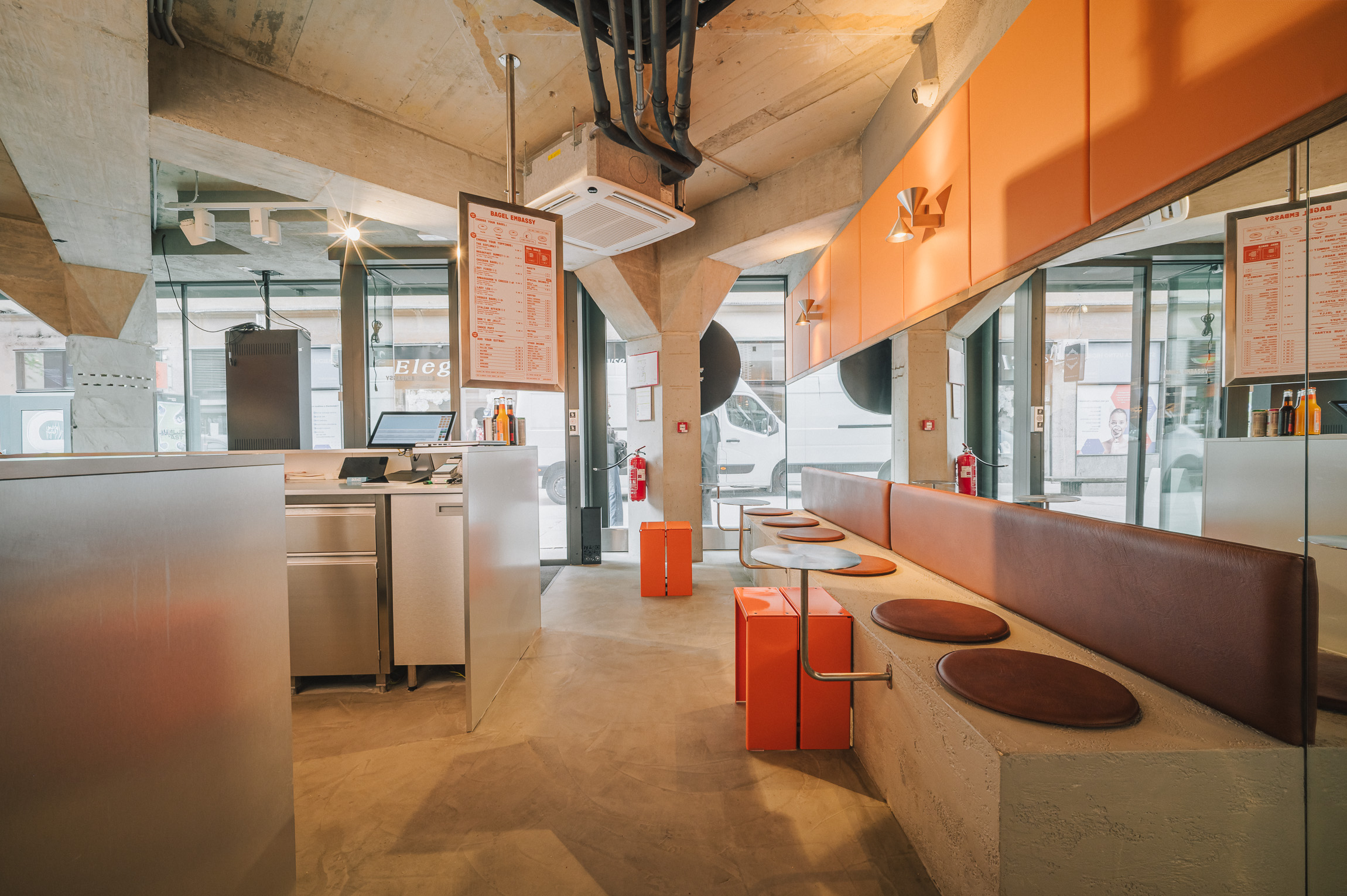
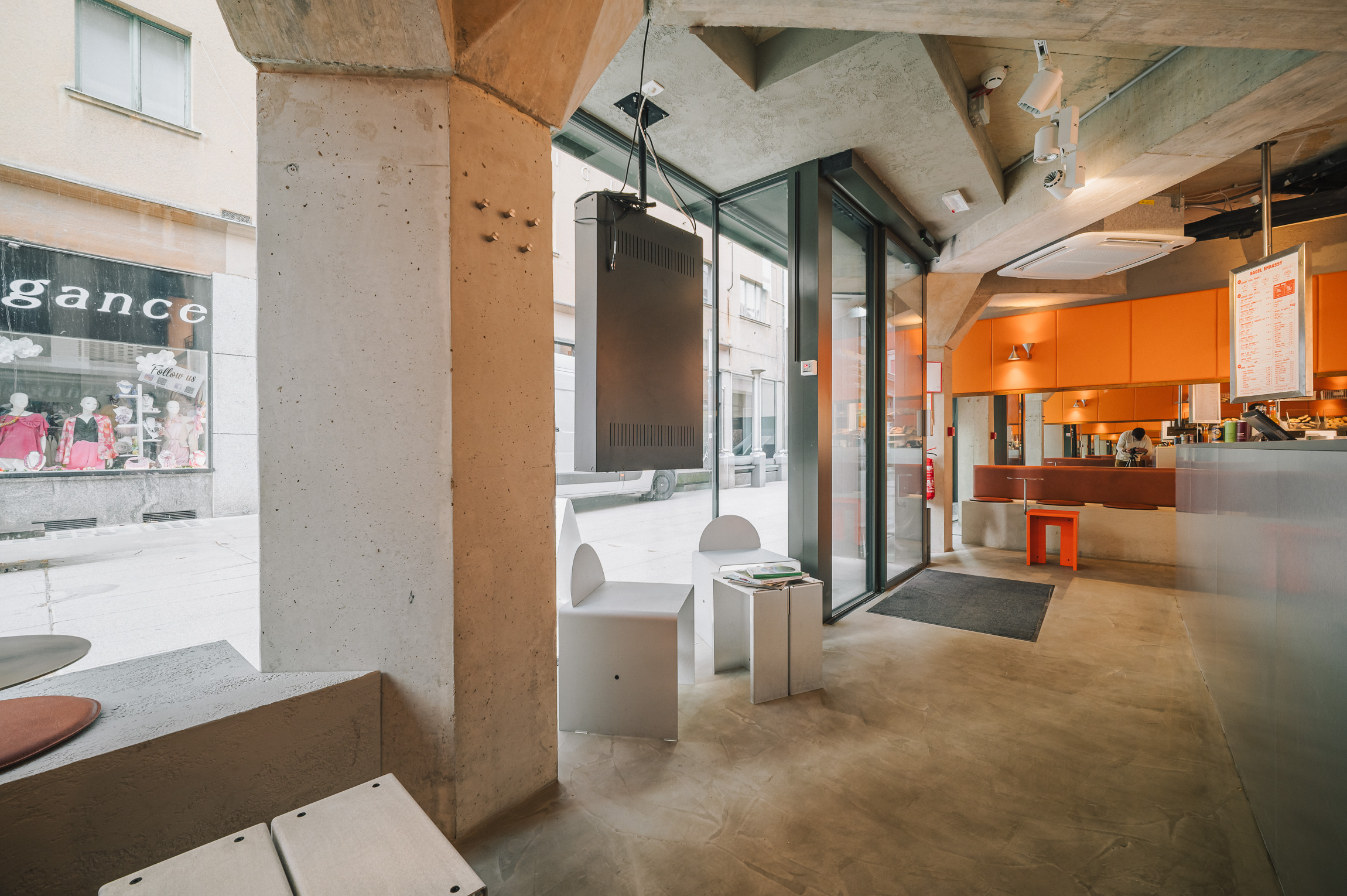
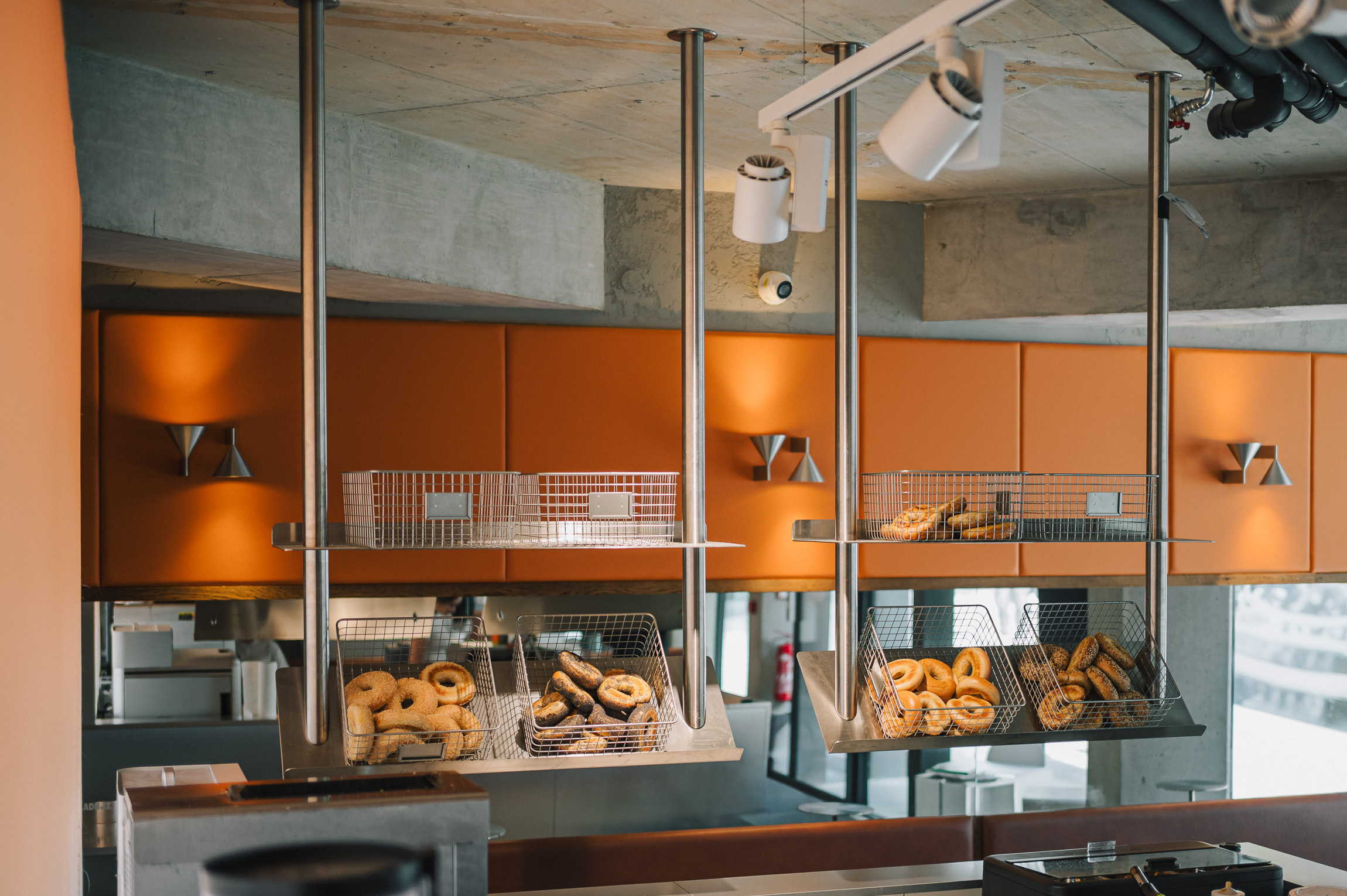
We wanted to create a space that functions as an urban living room. In the morning, you pop in for coffee and breakfast; during the day, creative types meet here; and in the afternoon and evening, the space naturally shifts into a more sociable atmosphere.
Where did you draw inspiration for the individual pieces of furniture?
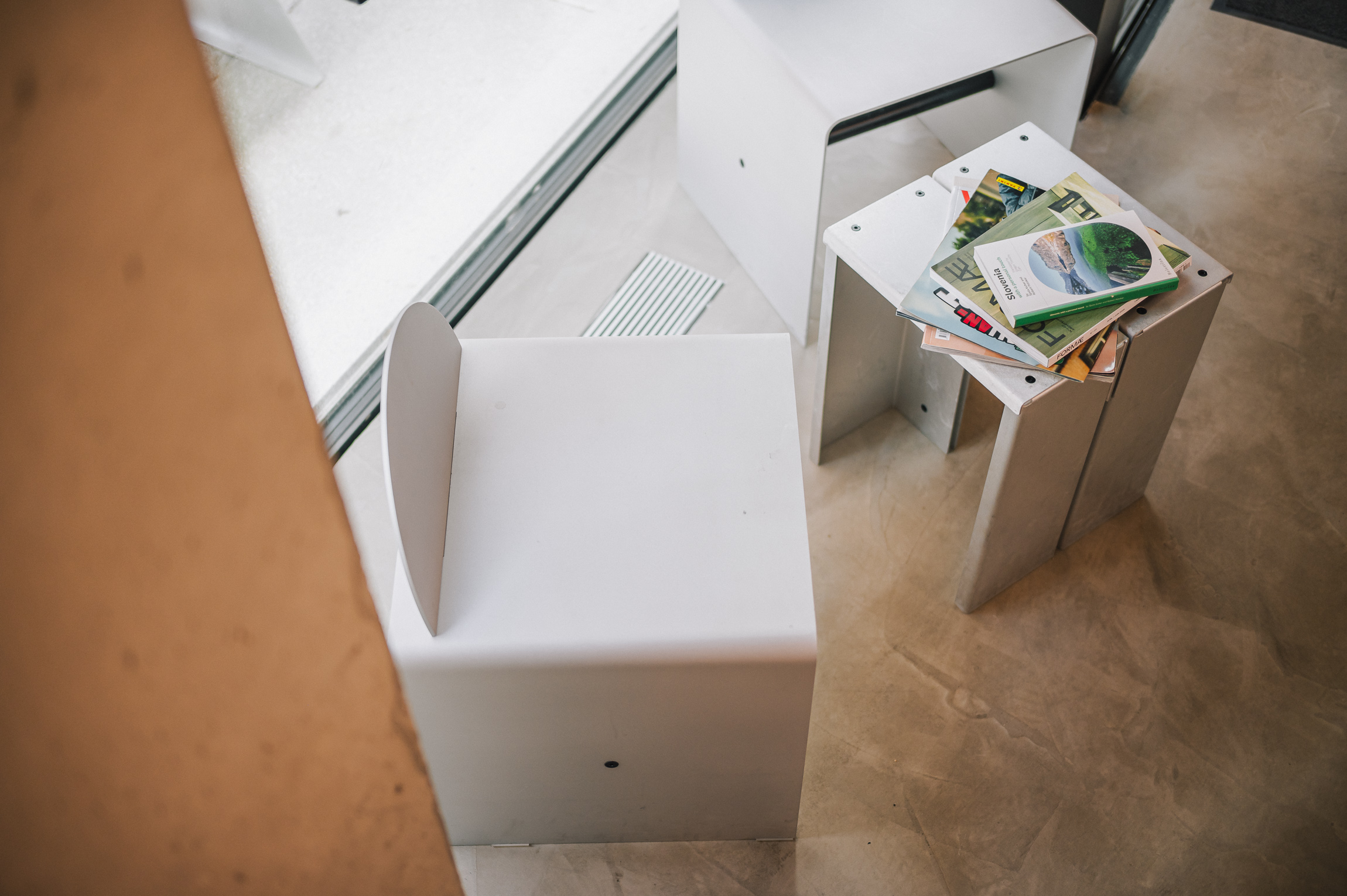
We drew heavily on functionality and the urban context. We didn’t want a decorative space, but one that people actually use.
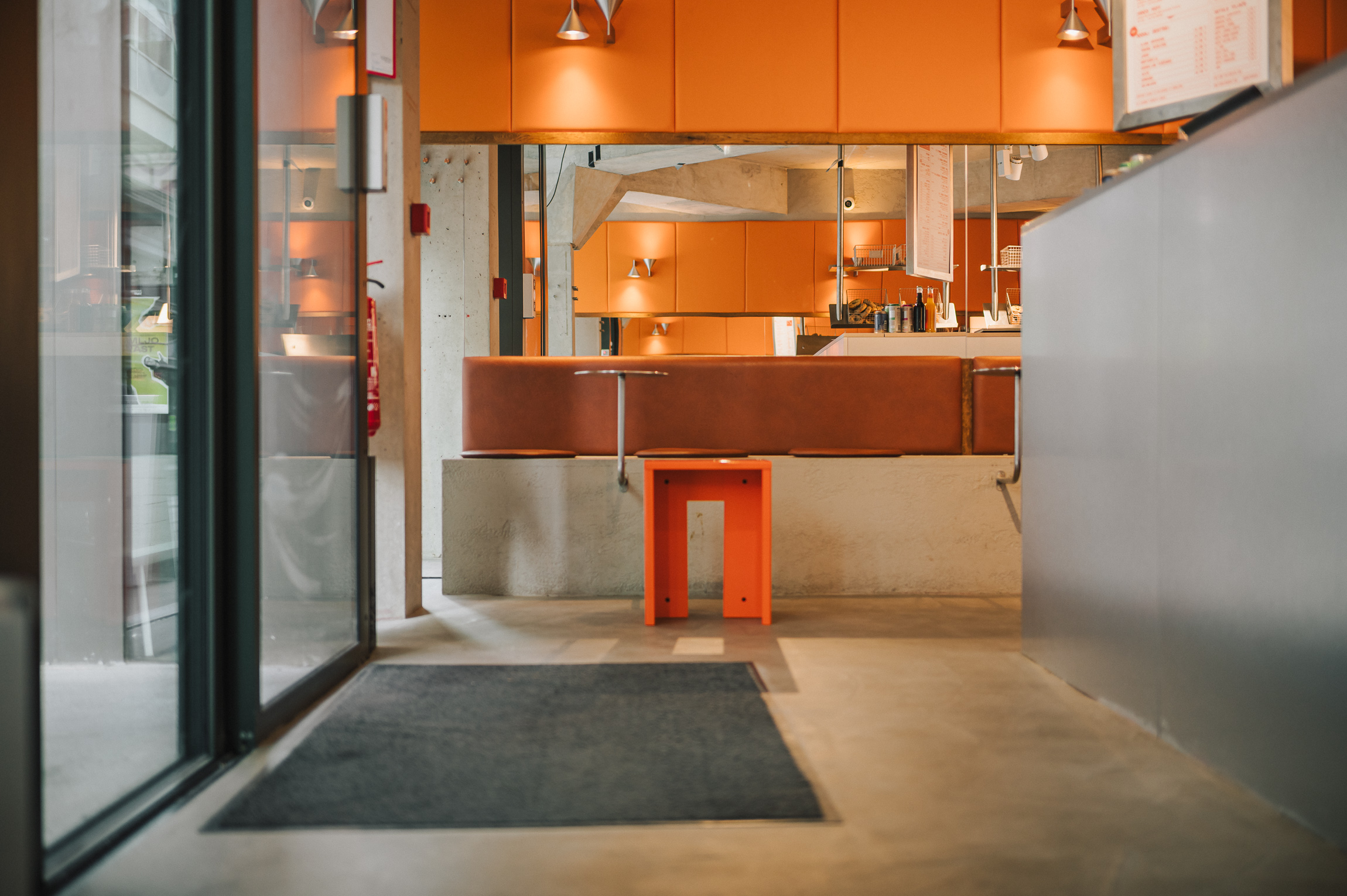
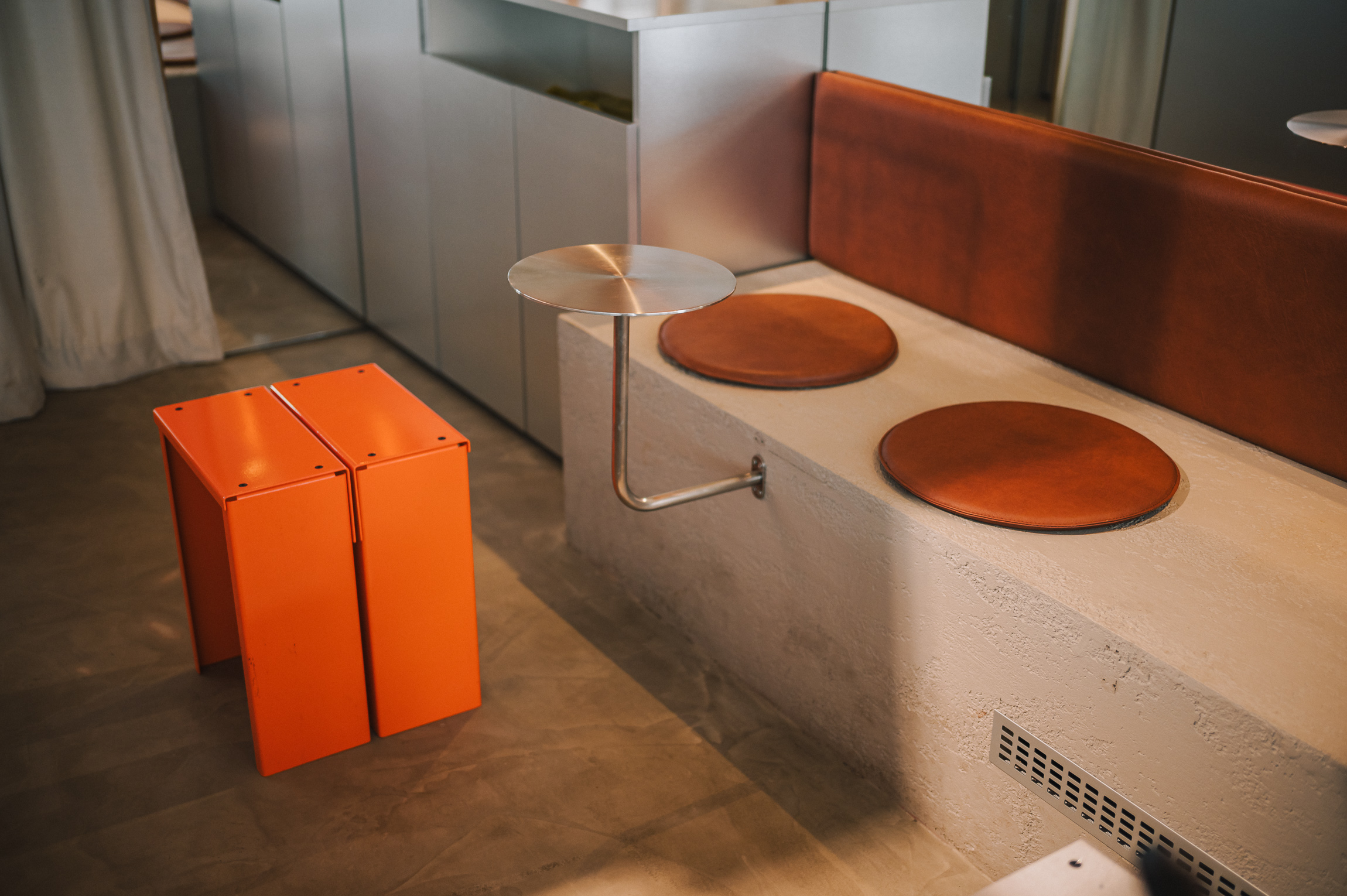
The pieces are designed in a minimalist style, with clean lines and materials that can withstand everyday use. At the same time, every piece contributes to the whole – nothing is random, everything has a purpose.
How did you combine raw materials with a sense of warmth?
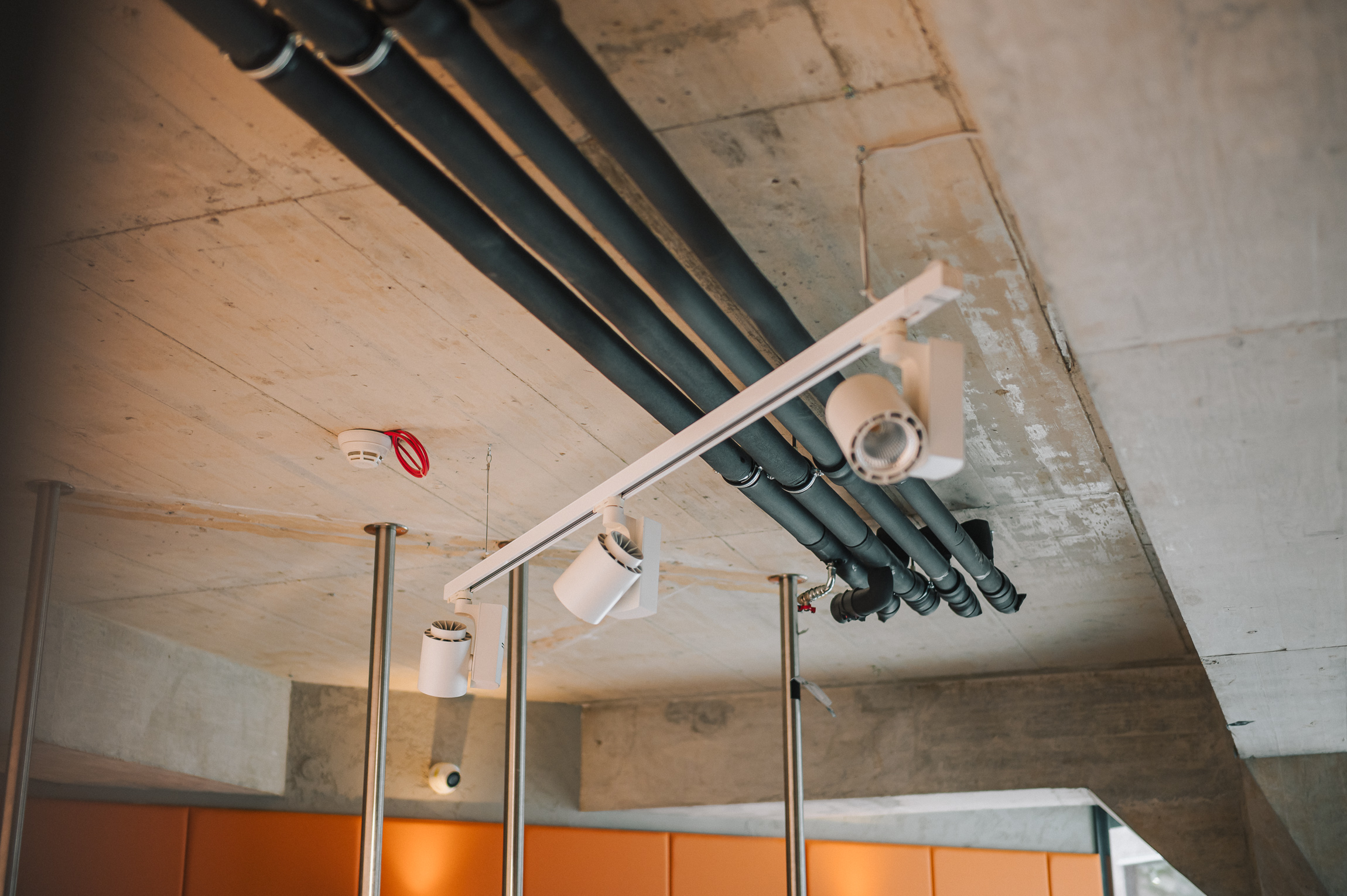
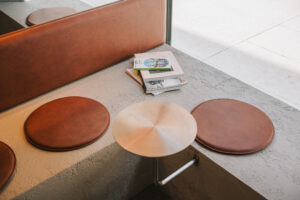
he space’s base is quite raw – concrete, metal, exposed services – which gives it an industrial character.
But we didn’t want it to feel cold. So we added warm colour accents, particularly shades of orange, wooden elements and carefully considered lighting, which softens the space.
This contrast between the raw and the warm is very important to us, as it creates a balance – the space is visually striking, yet at the same time a pleasant place to spend time.
Which element in the space defines it most?
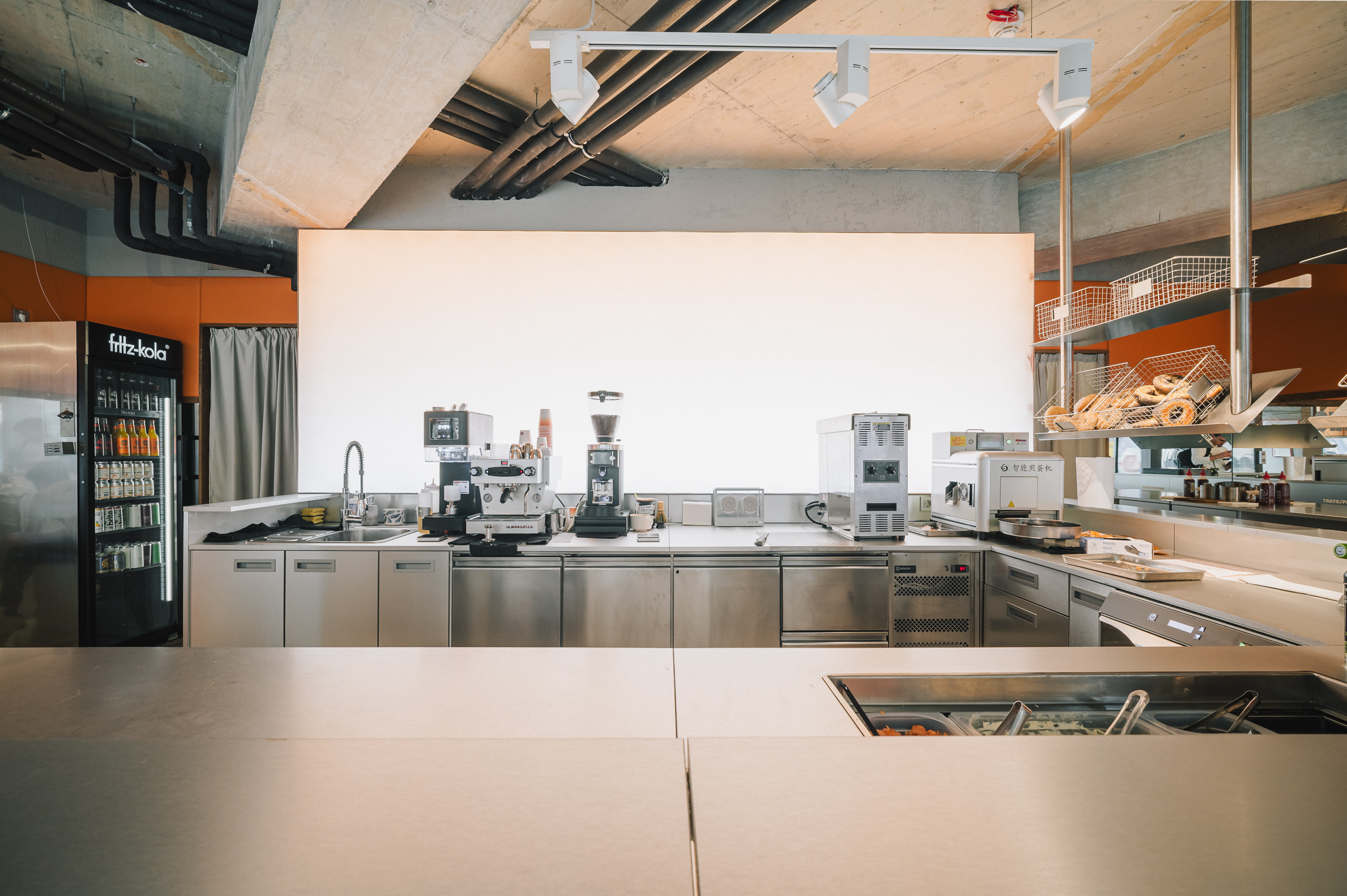
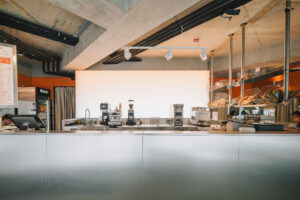
The main bar is definitely the heart of the space. It’s the first point of contact with visitors and, at the same time, the hub of activity – from day-to-day interactions to our morning DJ sets, which have become a distinctive part of Bagel Embassy’s identity.
Why did you make the kitchen the focal point?
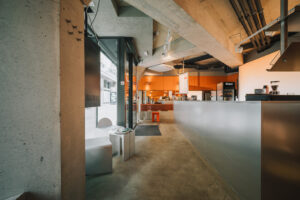
We didn’t want to hide the kitchen. We believe it’s important for the food preparation process to be visible.
This gives the space a sense of authenticity and energy – you can see what’s going on, how your meal is being prepared. At the same time, the open-plan layout creates a sense of connection between the team and the guests, which is crucial for us.
What is your vision for the future of Bagel Embassy?
Our long-term goal is to build a recognisable brand that can also operate internationally.
We’d like to show that something ambitious, consistent and on a par with global standards can develop right here in Ljubljana. We’re interested in expanding into markets where bagel culture isn’t yet established – such as Croatia, Austria and Hungary.
But before that, we want to get things right at home – test the system, develop processes and build a stable foundation.
What advice would you give to young people who want to be bold but don’t dare?
The first thing is to realise that creativity alone isn’t enough. Every idea needs to be backed up by organisation.
A large part of what we do isn’t creative at all – it’s about processes, logistics and management. We have practically the same number of people looking after the organisational side as we do creating content.
The second thing is patience. Many people give up after a year, but the reality is that growth comes gradually. Year after year, you build up your track record, your processes and – most importantly – trust.
And it is precisely this trust that is often the deciding factor in the end.