Rental income is currently subject to a 25% income tax rate, applied after deducting a standard expense allowance of 10%. If the Act on Intervention Measures for the Development of Slovenia (ZIURS) enters into force following the referendum on 6 December 2026, the rate will fall to 15%. A reduced rate of 5% will apply to qualifying rentals to tenants under 30 or tenants supporting a child under 18. The new rates will apply to income earned in 2026.
This guide covers the rules for property owners who let out a residential property on a long-term basis as private individuals outside the scope of a business activity. It also outlines what landlords and tenants should check before signing a rental agreement.
ZIURS referendum on 6 December 2026
On Sunday, 6 December 2026, voters will decide whether the Act on Intervention Measures for the Development of Slovenia (ZIURS) will enter into force. The National Assembly called the referendum on 16 October 2026, and the decree was published in the Official Gazette of the Republic of Slovenia under reference no. 1692/2026. Among other measures, the Act lowers the tax on rental income and temporarily changes the rules for short-term tourist rentals. The sections headed “What would change” explain the proposed changes.
Under Article 90 of the Constitution, the Act is rejected if a majority of voters who cast valid ballots vote against it and those votes represent at least one fifth of all eligible voters. The current rules remain in effect pending the outcome.
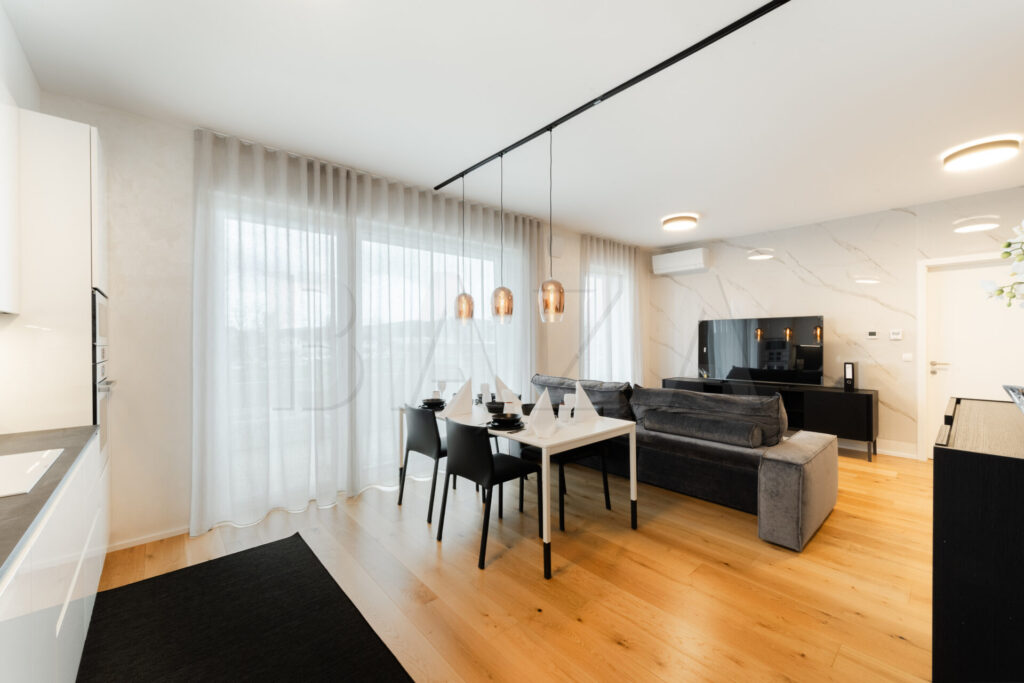
2.5-room apartment, Ljubljana Bežigrad
How is rental income taxed?
If you let an apartment to private individuals outside the scope of a business activity, you are liable for income tax on the rent you receive. Rental income is taxed separately from your salary and other income at a rate of 25%, as set out in Article 135.č of the Personal Income Tax Act (ZDoh-2).
What would change — A lower income tax rate
ZIURS reduces the income tax rate on rental income from 25% to 15% for all landlords who let property as private individuals.
It also introduces a 5% rate if you let an apartment or house to a tenant who is under 30 or supports at least one child under 18. The tenant must live in the property and register it as their permanent residence.
The amended provisions of ZDoh-2 would apply from 1 January 2026, including to rental income earned during 2026.
Which expenses reduce your taxable rental income?
Under Article 77 of ZDoh-2, you deduct a standard expense allowance of 10% from your rental income to determine the taxable amount. In 2020 and 2021, the standard allowance was 15%.
You can also choose to deduct actual property maintenance expenses in place of the standard allowance. Eligible expenses primarily include repairs, since deductible maintenance work must preserve the property’s functional value. You can claim expenses you paid while the property was let, provided you can document the amounts with invoices. Claiming actual expenses is generally worthwhile when they exceed the standard allowance.
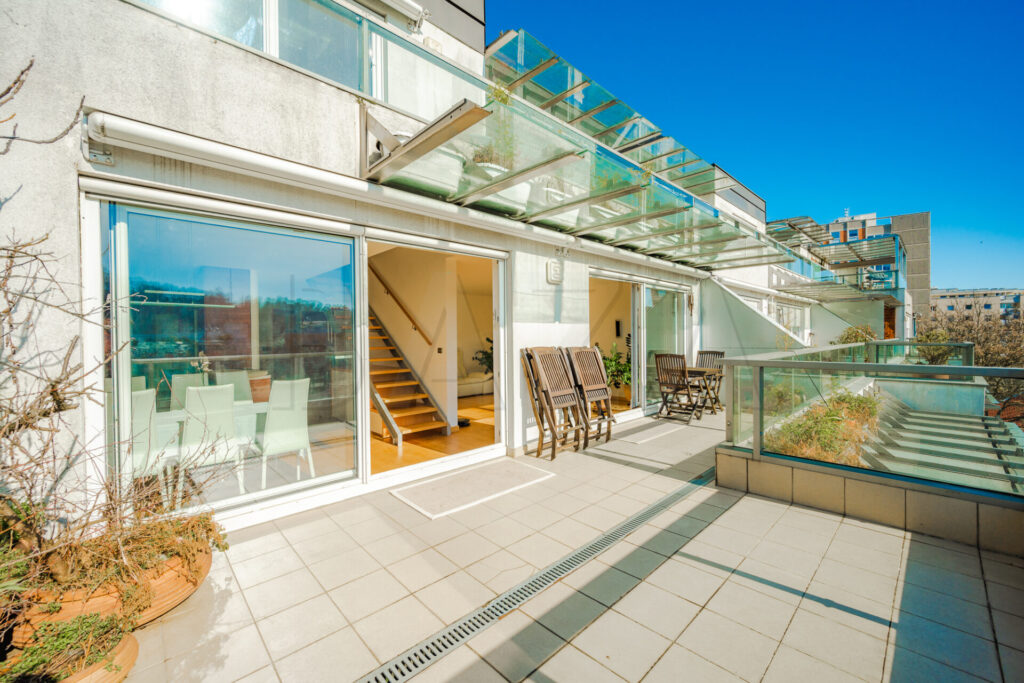
4-room apartment, Ljubljana city centre
How much tax will you pay? A worked example
Suppose you let an apartment for €700 per month, earning €8,400 a year. After deducting the 10% standard expense allowance, your taxable rental income is €7,560. At a rate of 25%, the annual tax is €1,890.
If you claim actual expenses, the calculation will differ. For more on how tax affects your net rental yield, see Renting Out Property as an Investment: How to Calculate Yield and Manage Risk.
What would change — A comparison of tax rates
| Who you let to | Tax rate | Annual tax |
|---|---|---|
| Any tenant under the current rules | 25% | €1,890 |
| Any tenant eligible for the standard rate if ZIURS enters into force | 15% | €1,134 |
| A qualifying tenant under 30 or supporting a child under 18 if ZIURS enters into force | 5% | €378 |
When and how do you file a rental income tax return?
If you let an apartment to another private individual or to a foreign legal entity, you must file your rental income tax return by 28 February of the following year. You can submit the form through eDavki, the online portal of the Financial Administration of the Republic of Slovenia (FURS), or send it to the relevant tax office. FURS uses your return to issue a tax assessment by 30 April.
If you miss the deadline or fail to file, you may be fined between €250 and €400.
FURS forwards the rental transaction details to the Real Estate Market Register (ETN). If you let your apartment to a private individual, FURS handles the reporting to the register.
When are you exempt from filing a return?
If your tenant is a legal entity based in Slovenia or an individual carrying on a business, such as a sole trader, the tenant calculates and pays the tax on your behalf as the withholding agent. In this case, the tenant handles the tax payment and you are exempt from filing a rental income tax return. To deduct actual expenses, submit a claim to reduce your taxable rental income by 28 February.
You are also exempt from filing a return for income from letting common areas in a multi-unit residential building if you receive that income through the building manager.
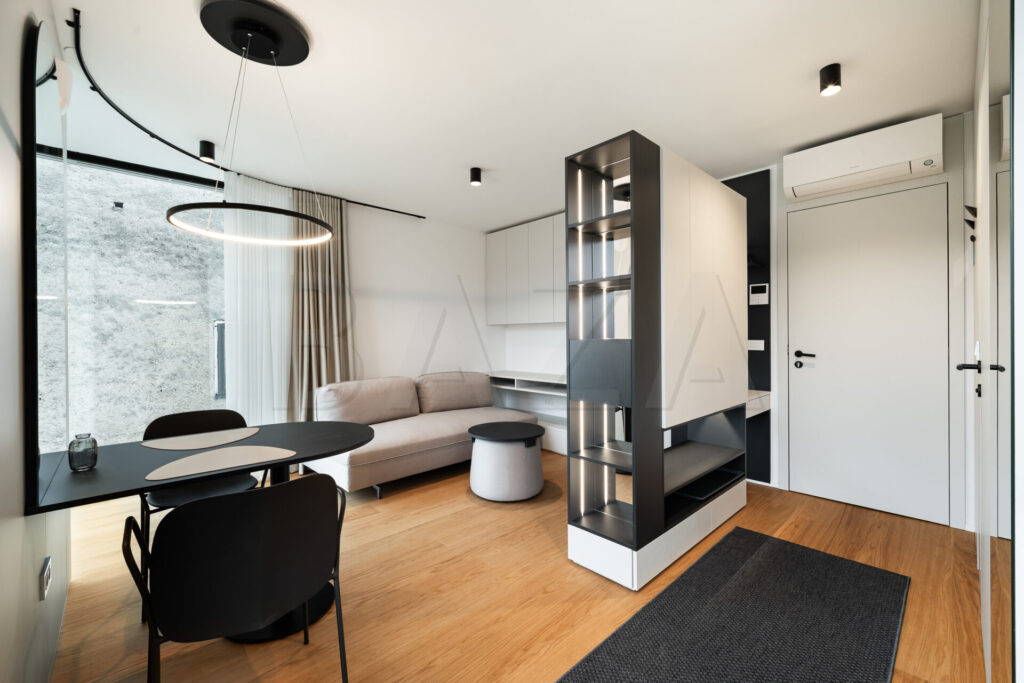
2-room apartment, Ljubljana city centre
What should a rental agreement include?
Article 84 of the Housing Act (SZ-1) requires rental and subletting agreements to be made in writing. A written agreement records the terms agreed by both parties and provides the basis for declaring rental income. For more details, see What Is a Rental Agreement?
Make sure the agreement specifies:
- The parties to the agreement and everyone who will live in the apartment
- A description of the apartment, its furnishings and equipment
- The rent and its payment due date
- The operating costs and who pays them
- The amount of the security deposit and the conditions for returning it
- The duration of the tenancy and the applicable notice periods
When the tenant moves in, prepare a handover report recording the meter readings, the furnishings and equipment, and photographs of the rooms. This gives both parties a record of the apartment’s condition and can help prevent disputes when the tenant moves out.
How can a landlord terminate a rental agreement?
A landlord can terminate a rental agreement by giving at least 60 days’ notice under Article 112 of SZ-1, as applicable from 1 December 2025. If termination is disputed, the landlord must bring a court action to terminate the agreement.
If the tenant breaches the agreement, the landlord may terminate it only after giving the tenant written notice of the breach and a reasonable period to remedy it, as required by Article 103 of SZ-1.
For greater legal certainty, you can execute the rental agreement as a directly enforceable notarial deed. The deed must also specify the notice period.
What rules apply to short-term tourist rentals?
Short-term tourist rentals are governed by the Hospitality Act. The new Hospitality Act (ZGos-1), which has applied since 1 January 2026, introduced stricter requirements for anyone offering tourist accommodation in an apartment. For an overview of how the two types of rental differ, see Short-Term and Long-Term Property Rentals.
What would change — Temporary suspension of ZGos-1
ZIURS would suspend the application of ZGos-1 until 31 December 2026. The previous Hospitality Act would apply again during that period. In 2027, there would be no limit on the number of days apartments could be let to tourists.
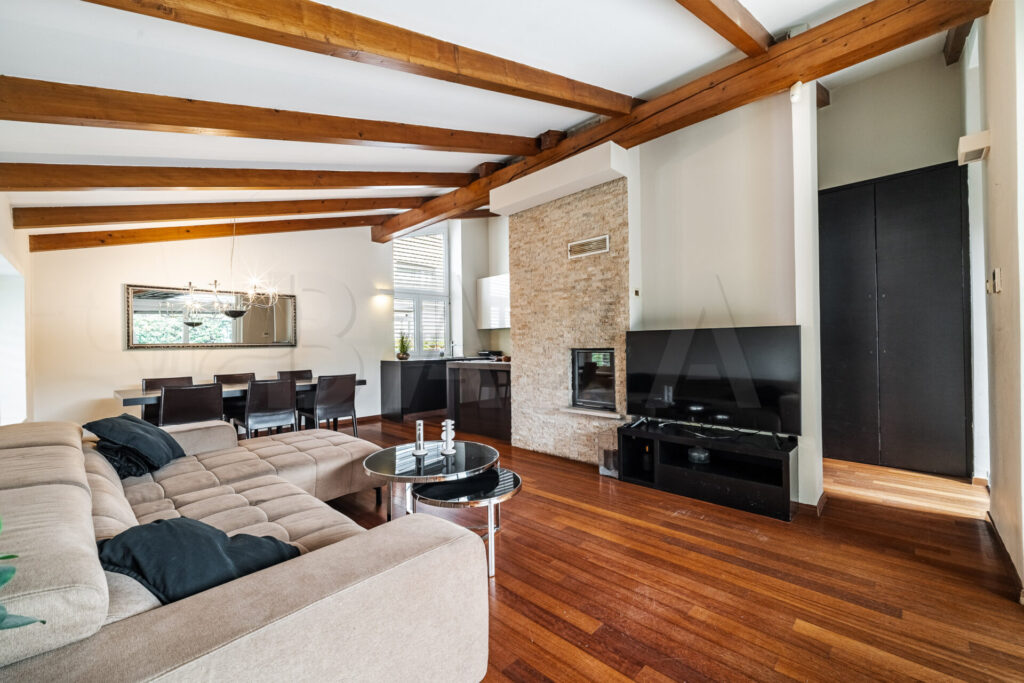
Detached house, Ljubljana Šentvid
What should landlords check before letting a property?
- Do you have a written rental agreement? It gives you a record of what you agreed with the tenant.
- Are the costs and deposit terms clear? Operating costs and the return of the deposit are common sources of disputes.
- Did you document the apartment’s condition at handover? A handover report with photographs provides a record you can refer to when the tenant moves out.
- Will you declare your income on time? File the return for the previous year by 28 February to avoid a potential fine.
What would change — Eligibility for the 5% rate
If ZIURS enters into force, check whether your tenant is under 30 or supports a child under 18 and whether they have registered their permanent residence at the property. The tenant must also live there. Keep the rental agreement, confirmation of residence registration and proof of payments.
What should tenants know?
Ask for a written rental agreement and a detailed handover report. Check which costs are included in the rent and what conditions apply to the return of your deposit. If you want to make the apartment feel more like home, see Personalising a Rented Apartment.
What would change — Registering your permanent residence
If you are under 30 or support a child under 18, you must register your permanent residence at the rented property for your landlord to qualify for the 5% tax rate. The landlord and tenant still agree on the rent between them.
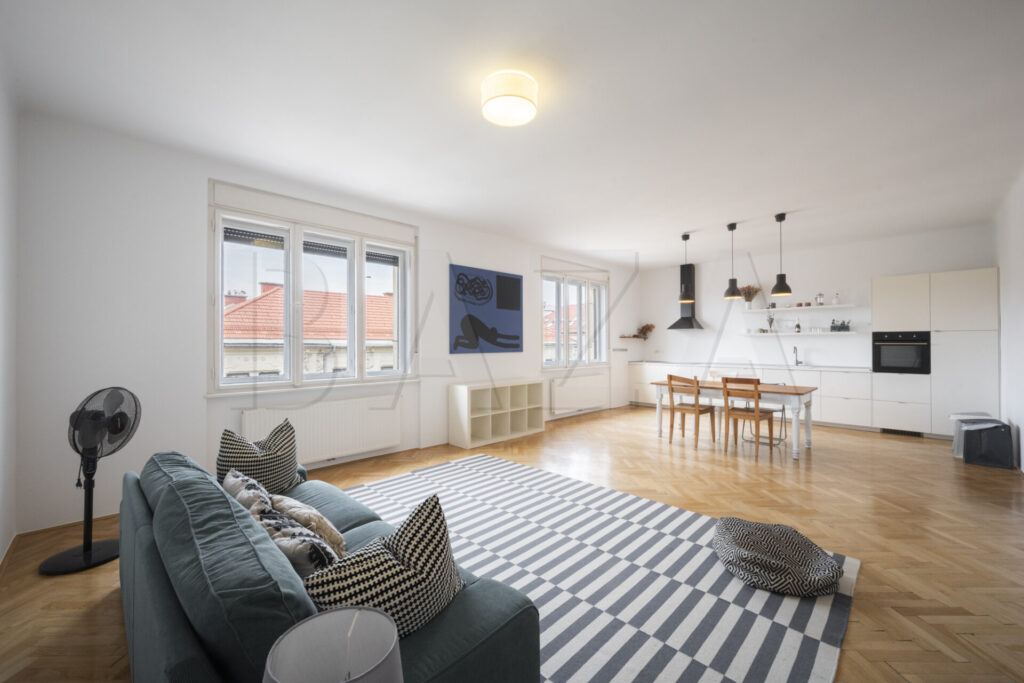
3-room apartment, Ljubljana city centre
Letting out an apartment?
Clear rental terms protect both landlords and tenants and help the tenancy run smoothly.
At Baza Real Estate, we help you let your property, from preparing the rental agreement and selecting a tenant to handling the handover. Read more about our approach in The Role of a Real Estate Agency in Letting Your Property Safely and Legally, or browse our property listings for apartments to rent.
For more information, call us on +386 40 626 131 or email tajnistvo@bazarealestate.com.
This article is for information only and does not constitute tax or legal advice. The tax treatment of an individual rental depends on the rental agreement, the tenant’s circumstances and the applicable legislation.
Sources
- Personal Income Tax Act (ZDoh-2), Article 77
- Income from Letting Property — FURS
- Letting a Room, Apartment, House, Garage or Other Property — FURS
- Taxation of Income from Letting Property — GOV.SI
- Declaring Income from Letting Property — eDavki
- Housing Act (SZ-1), Article 84
- Housing Act (SZ-1), Article 103
- Housing Act (SZ-1), Article 112
- Why Execute a Rental Agreement as a Directly Enforceable Notarial Deed? — Official Gazette of the Republic of Slovenia
- Real Estate Mass Valuation Act (ZMVN-1) — Official Gazette of the Republic of Slovenia, No. 77/2017
- Real Estate Market — Who Must Report to the Real Estate Market Register (ETN) — Surveying and Mapping Authority of the Republic of Slovenia (GURS)
- Decree Calling a Legislative Referendum on ZIURS — Official Gazette of the Republic of Slovenia, reference no. 1692/2026
- Voting in the Legislative Referendum on 6 December 2026 — GOV.SI
- Constitutional Act Amending Articles 90, 97 and 99 of the Constitution of the Republic of Slovenia — Official Gazette of the Republic of Slovenia
- Act on Intervention Measures for the Development of Slovenia (ZIURS) — IUS-INFO
- ZIURS: What Changes Does the New Intervention Act Introduce? — IUS-INFO
- Act on Intervention Measures for the Development of Slovenia — Association of Urban Municipalities of Slovenia
- Slovenia’s Intervention Act on the Horizon — Schoenherr