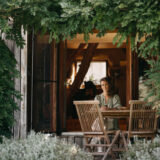
Gorička Lepotička is a unique accommodation in the Goričko countryside, founded by Alja Petric. A versatile cultural figure who also works as a singer, vocal coach and sound artist, she is, by training, an architectural engineer.
Although she no longer practises architecture professionally, she has a clear understanding of spatial principles, which remain very close to her heart. Through her work in the fields of contemporary, improvised and cross-genre music, she has also developed a keen sense of sound, atmosphere and the experience of space.
We spoke to Alja about the story behind ‘Gorička Lepotička’, the journey that led to its creation, and what she hopes to offer guests seeking a different kind of break for a few days in the embrace of the Goričko region.
How did the story of Gorička Lepotička begin, and when did you first realise that you wanted to create a space just like this?
It all began in 2011, when, towards the end of my studies, I met my then partner Kristijan Zver, the head of a company specialising in the construction of walls made from straw bales, timber and clay. As I’d always been interested in architecture focused on sustainable living, I joined the company and spent a few years working on the construction of private homes, the outer walls of which were made from straw, timber and clay.
It was during this period that our house was built, which is now called Gorička Lepotička. It was designed as our home, so it took shape very ‘organically’, in line with our needs, values, outlook on living and financial means at the time.
Why Goričko, of all places? What drew you to this part of Slovenia?
Simply a combination of circumstances. I was born in Sobota, but during my student years – when I travelled extensively whilst studying abroad and lived quite a different life – I never imagined I’d one day live in Goričko.
Then love came along, which brought me into the countryside for a few years and into direct harmony with nature. They were wonderful years, during which I learnt a great deal and also gained new insights into many things. Goričko showed me a different rhythm of life – one that is slower, more direct and more connected to the environment.
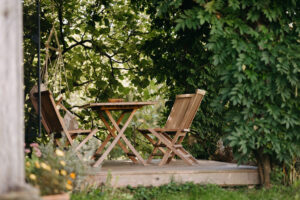
What was most important to you when designing your house – aesthetics, functionality, a connection with nature, or the atmosphere created by the space?
Atmospheric feel means a great deal to me in life, and it is often my guiding principle. When designing the house, my main priority was how to incorporate as much of nature as possible into the living space. Aesthetics are also high on my list. I like to be surrounded by beautiful spaces, and it’s important to me that they evoke something within me.
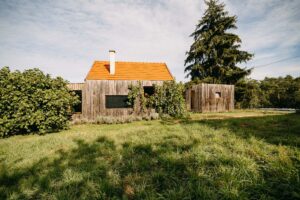
As the building is small, we also had to pay a great deal of attention to functionality. Furthermore, this was a conversion of an old rural barn – in other words, a small building with fixed dimensions, existing terrain and other constraints. When designing it, we therefore had to adapt to the given situation at all times and strike a balance between functionality and aesthetics.
When I later moved into the cottage, I realised that we had, after all, prioritised ‘feel and aesthetics’ slightly more than functionality. Today, I would probably give certain details even more thought from the point of view of practicality. But perhaps it is precisely this imperfection that forms part of its character.
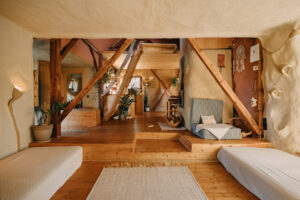
Where did the idea to build using natural materials come from, and what appealed to you most about this approach to building?
The idea stemmed primarily from a passion for sustainable architecture and a desire to adopt a more responsible attitude towards the environment. I was drawn to natural, minimally processed materials that do not require large-scale industrial processes, the associated high energy consumption, or numerous additives to ensure durability.
I was also attracted to natural building because of its simplicity and primal nature. You take the materials provided by the environment – straw, wood, clay, sand, lime – and incorporate them into the building in a suitable way. These are materials with exceptional properties, which in many respects offer everything we need for comfortable, modern living. Above all, it is important that we know how to use them correctly.
How would you describe the experience of staying at Gorička Lepotička to someone who isn’t yet familiar with the Goričko region?
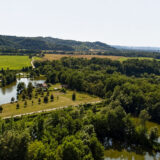
Goričko is a landscape that inspires many guests who visit the cottage. It lies in the east of Slovenia and is characterised by tranquillity, a slower pace of life and the warmth of its people.
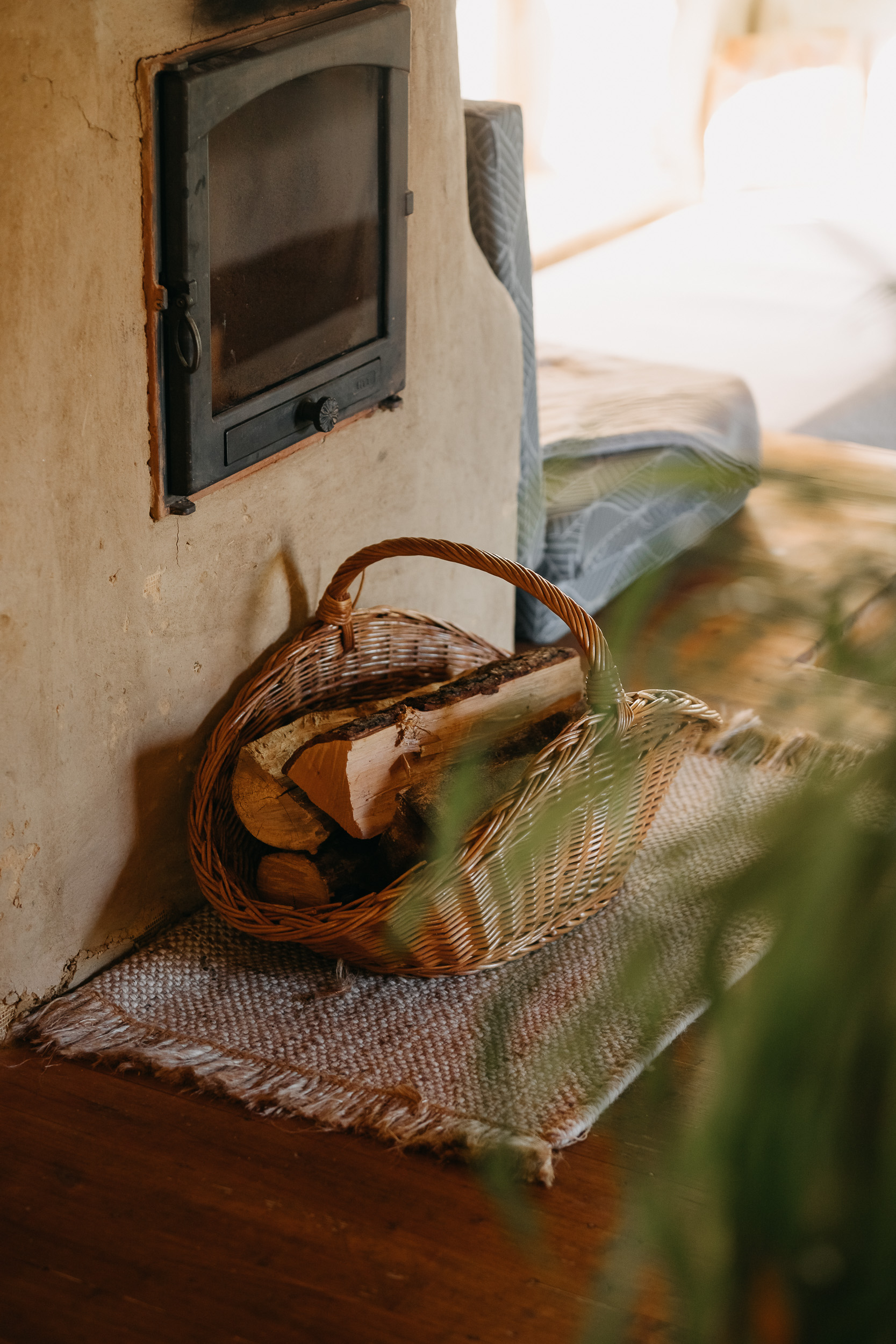
Gorička Lepotička evokes a sense of warmth, peace and tenderness in me. This is enhanced by the undulating lines, the welcoming atmosphere, the colours and materials, and above all, the warmth – including the very physical warmth of the fire in the stove.
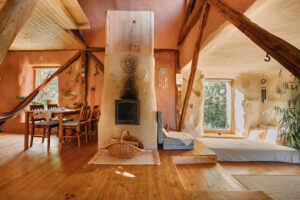
What does life in Goričko offer you that you might not find elsewhere?
I actually live in Ljubljana these days, which is precisely why Goričko is perhaps all the more important to me. It’s a place where I can escape the hustle and bustle of the city and reconnect with nature, silence and a slightly slower pace of life.
What do you hope visitors will take away with them after staying with you, apart from lovely memories?
Above all, I hope visitors take away the feeling that we are not separate from nature, but part of it. That our living space, too, can become a place of connection with nature, rather than something that separates us from it. I’d also like visitors to realise that nature actually offers us everything we need, and that we just need to know how to pause and notice it.
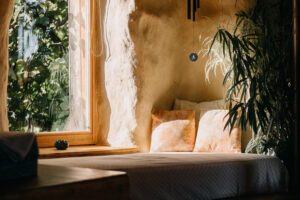
The interior of Gorička Lepotička combines natural materials, warmth and thoughtful details. How did you choose the furnishings and create the ambience?
When choosing the furnishings, we focused primarily on what was available locally and what we could use in the construction. We also had to take our financial constraints into account.
That’s why we chose more affordable materials, often sourced from the immediate vicinity. Gorička Lepotička was largely built using materials we found on the plot, in the woods or bought within a radius of about 30 km. That’s precisely why the cottage feels so deeply connected to the place from which it was created.
Which detail or element in the interior is your favourite, and why?
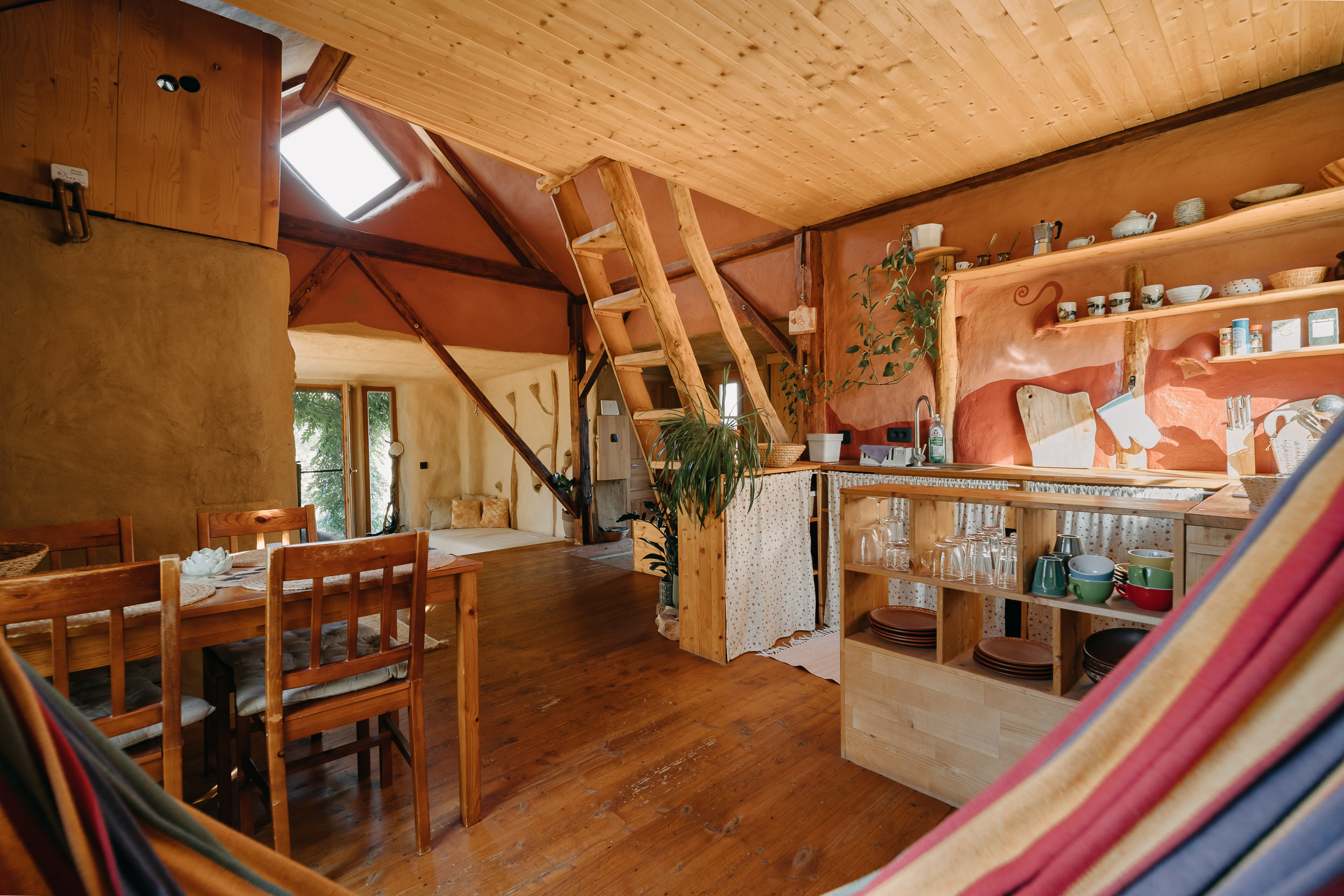
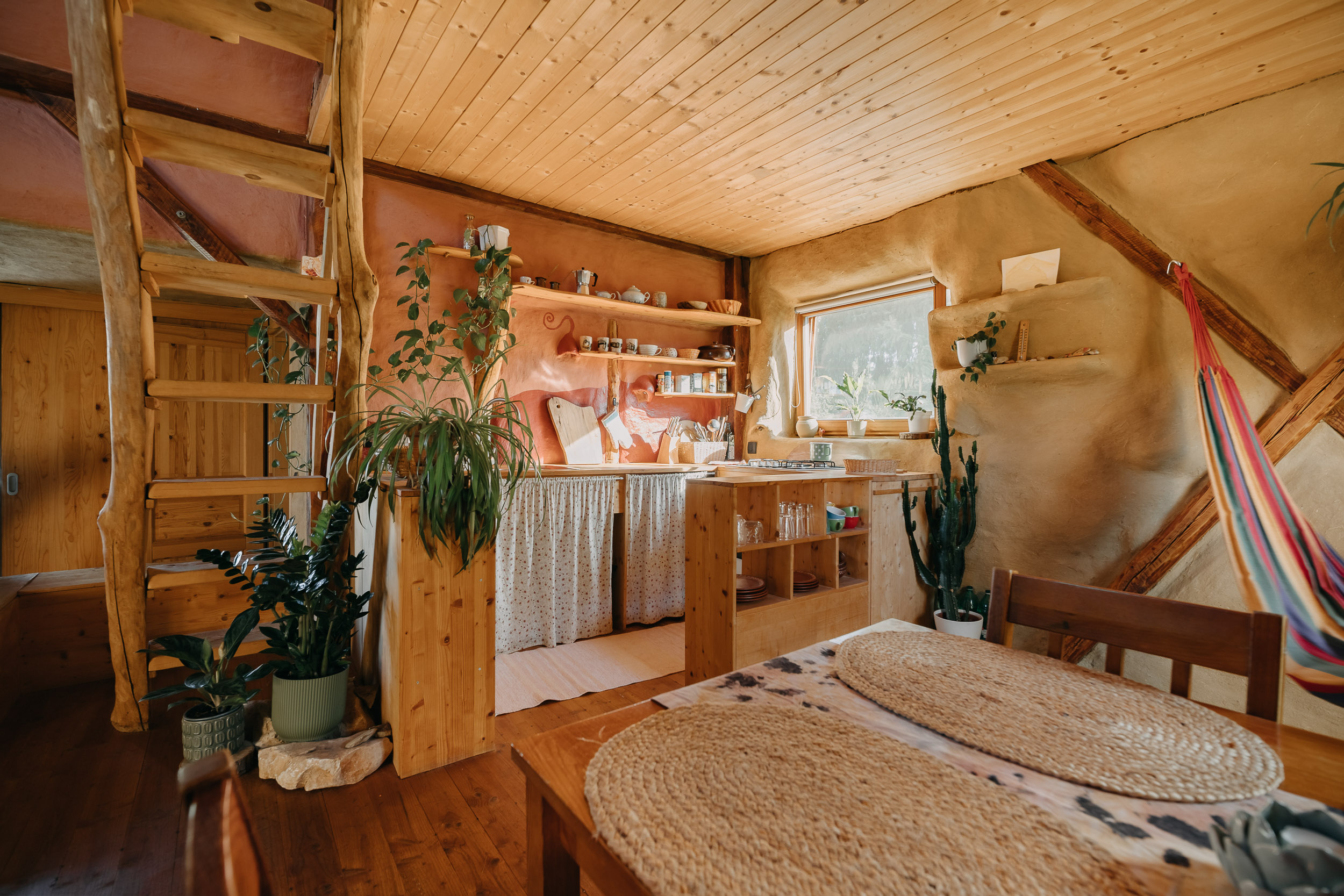
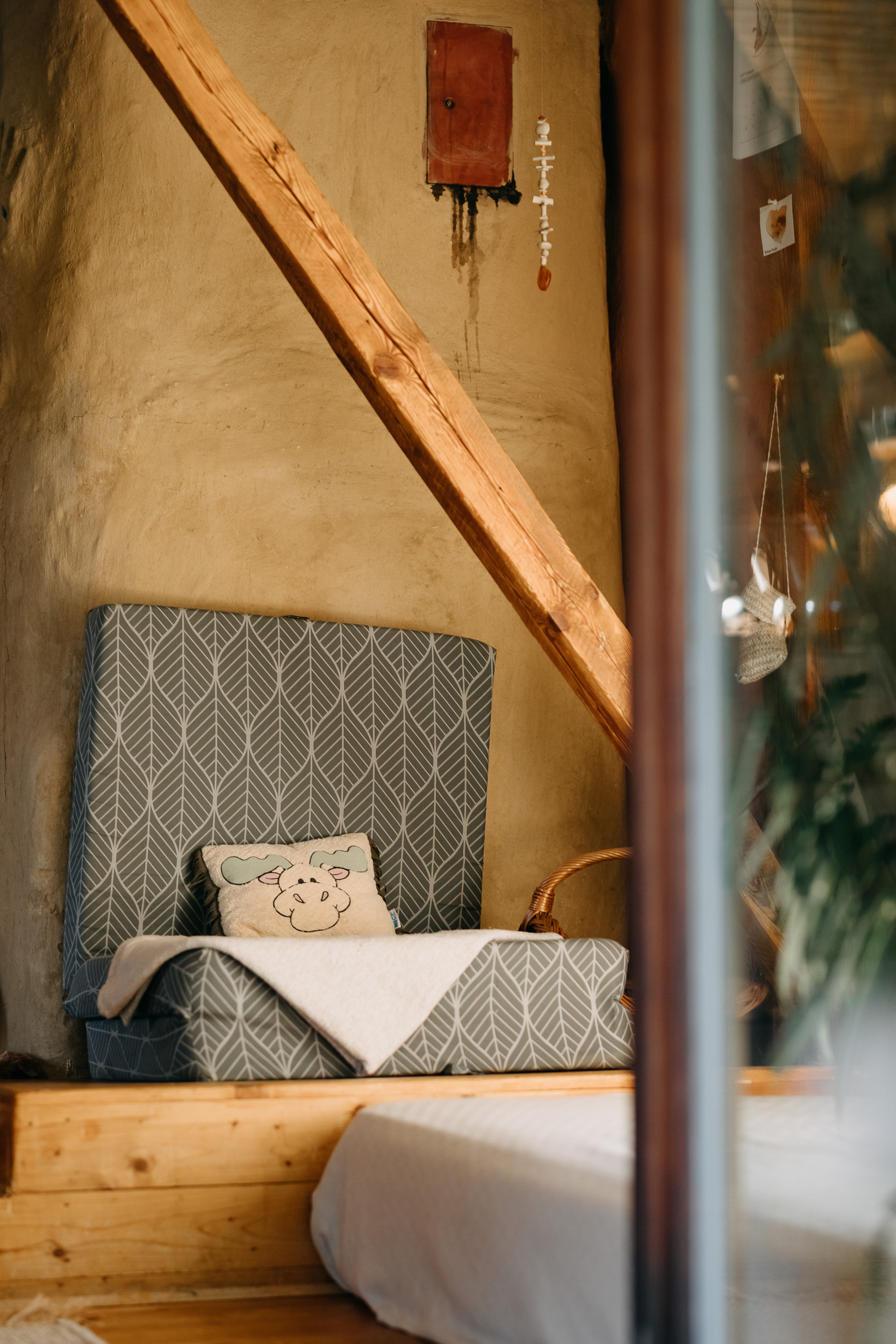
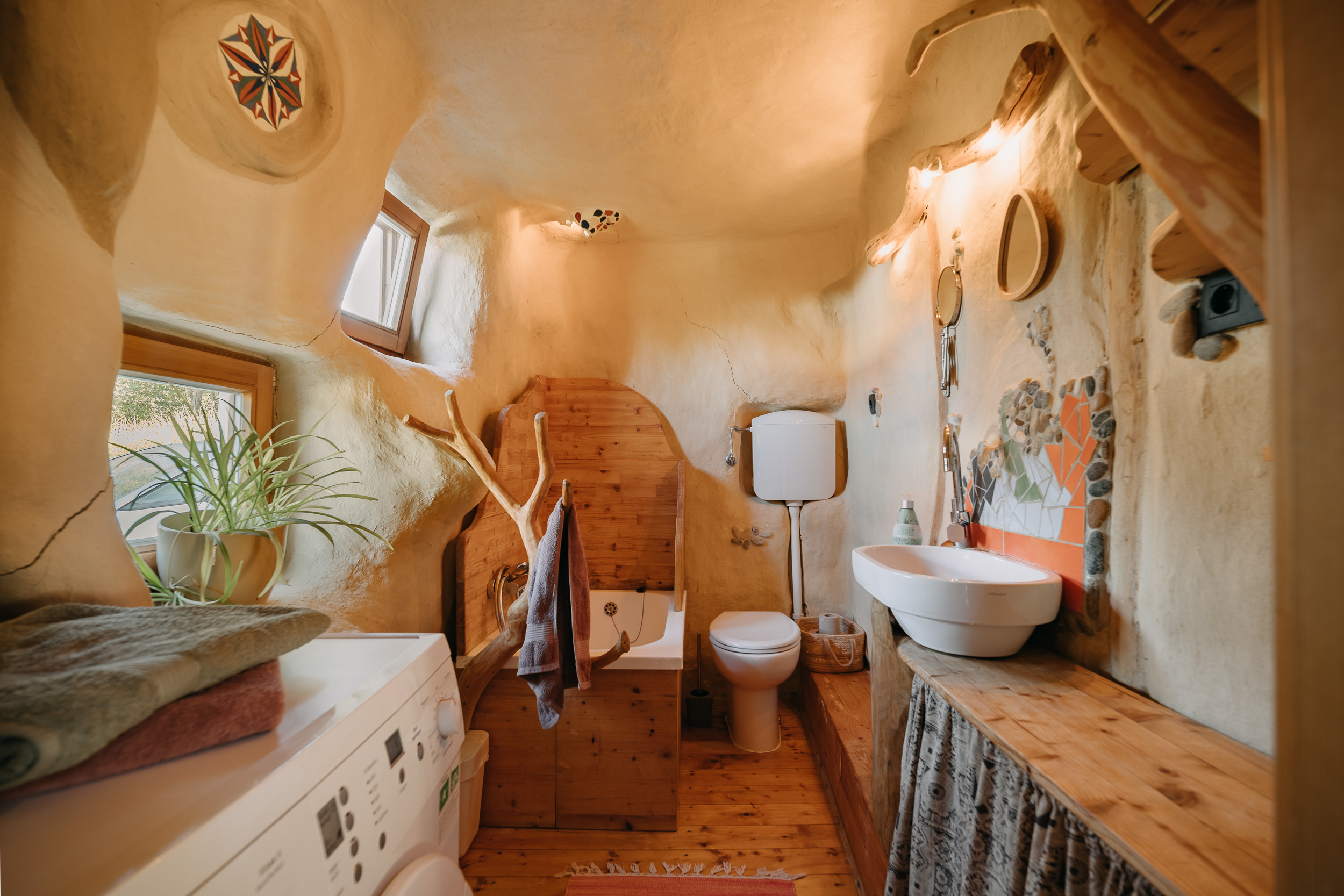
That’s quite a difficult question. After all these years, I’m still most in love with the walls, where their undulating texture, softness and pastel colours are something my eyes clearly never tire of.
I’m also incredibly proud of the lights built into the walls, which were the first element where the wall is no longer merely a partition or structural feature, but gains an additional function – it becomes a light fitting. During the day, the lights look almost like little flowers growing out of the wall, whilst at night they illuminate the space and take on a completely different function.
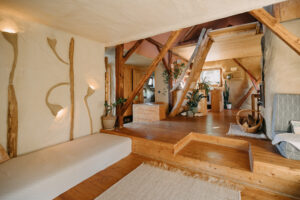
How did you balance aesthetics with functionality in the design of the fittings?
We balanced aesthetics with functionality precisely by integrating function into the architecture itself. The lights in the walls, for example, are not just light fittings but also an aesthetic element. The same applies to the shelves and recesses, which are carved or moulded directly into the wall. The staircase and shelves are made from undulating branches or tree trunks.
The building’s original structure has also been left visible and, at the same time, utilised for securing various elements. It seems to me that this is precisely what gives the space a sense of wholeness. When function is not something added later, but is part of the space from the very beginning.
In your opinion, what is it that makes a space a home?
A space becomes a home when our individual selves are expressed through it and become somehow rooted within it; the space is no longer just a space, but becomes an extension of the person, their way of life, memories and feelings. Perhaps a home is precisely the moment when a person and a space begin to complement one another and somehow merge with one another.
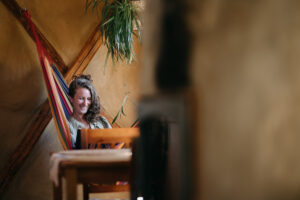
How important was the connection between the house and the surrounding natural environment in the design of Gorička Lepotička?
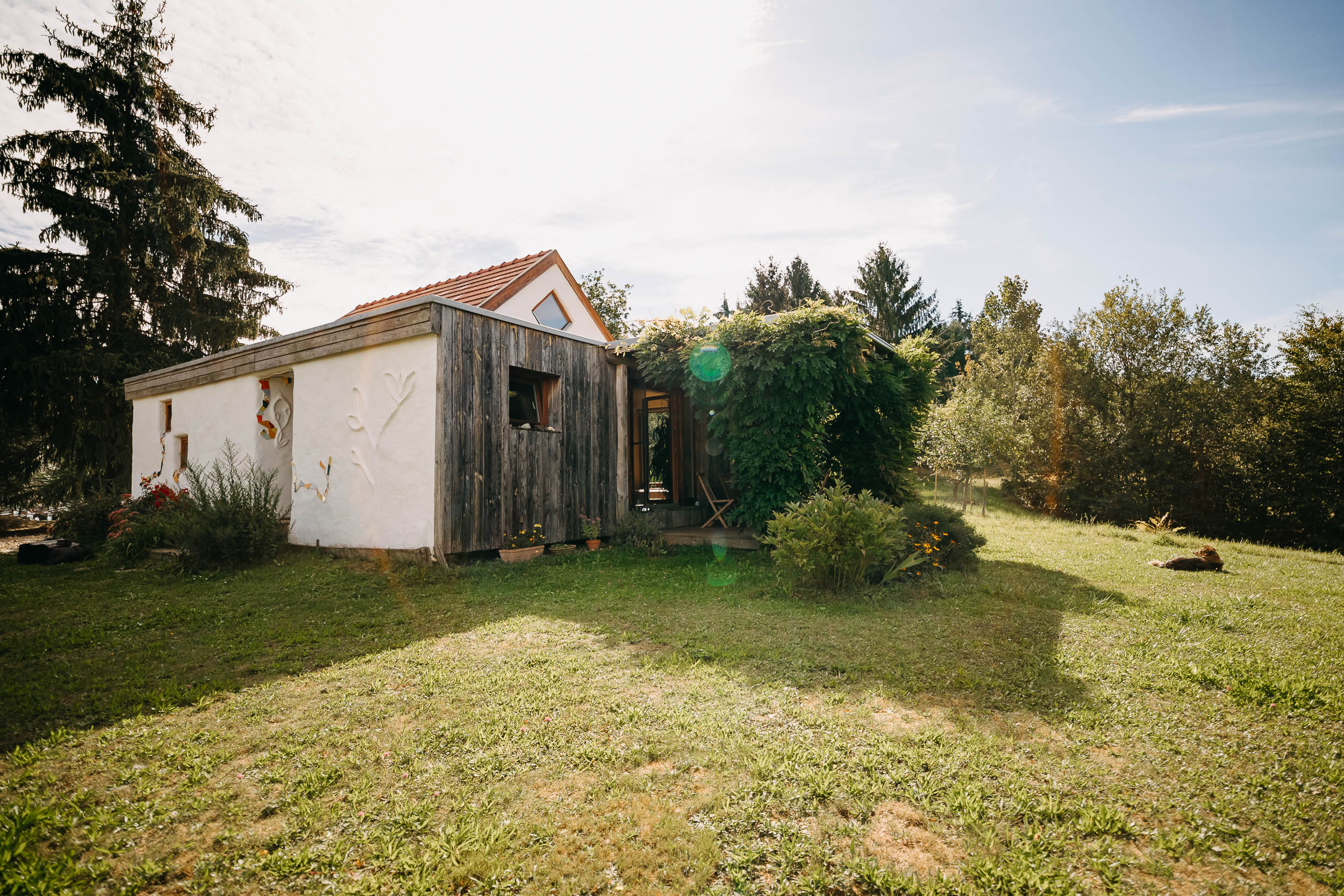
Very important. We wanted large windows so that the outdoor and indoor spaces would be as closely connected as possible.
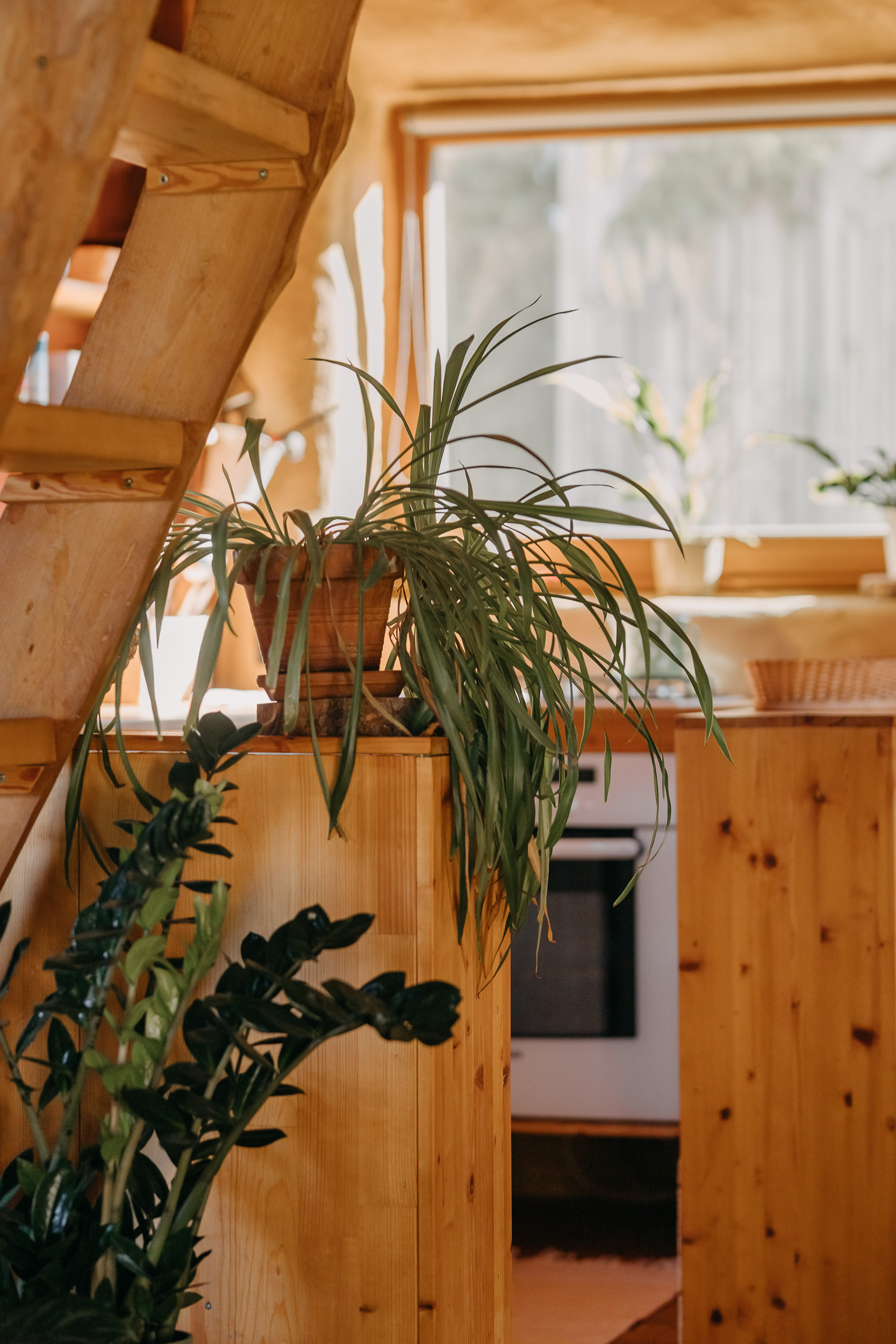
It was important to us that nature wasn’t just something you observe through a window, but that you bring it inside in some way. Given its size, the house has a lot of openings, so you can look out from practically every corner of it.
How did you design the exterior so that the house blends as naturally as possible into its surroundings?
Due to the small size of the plot, the existing building dimensions, the slope of the land and other circumstances, we were quite limited in how naturally we could integrate the house into its surroundings. By renovating and minimally extending the existing building, we therefore followed the architectural characteristics already present in the surrounding area.
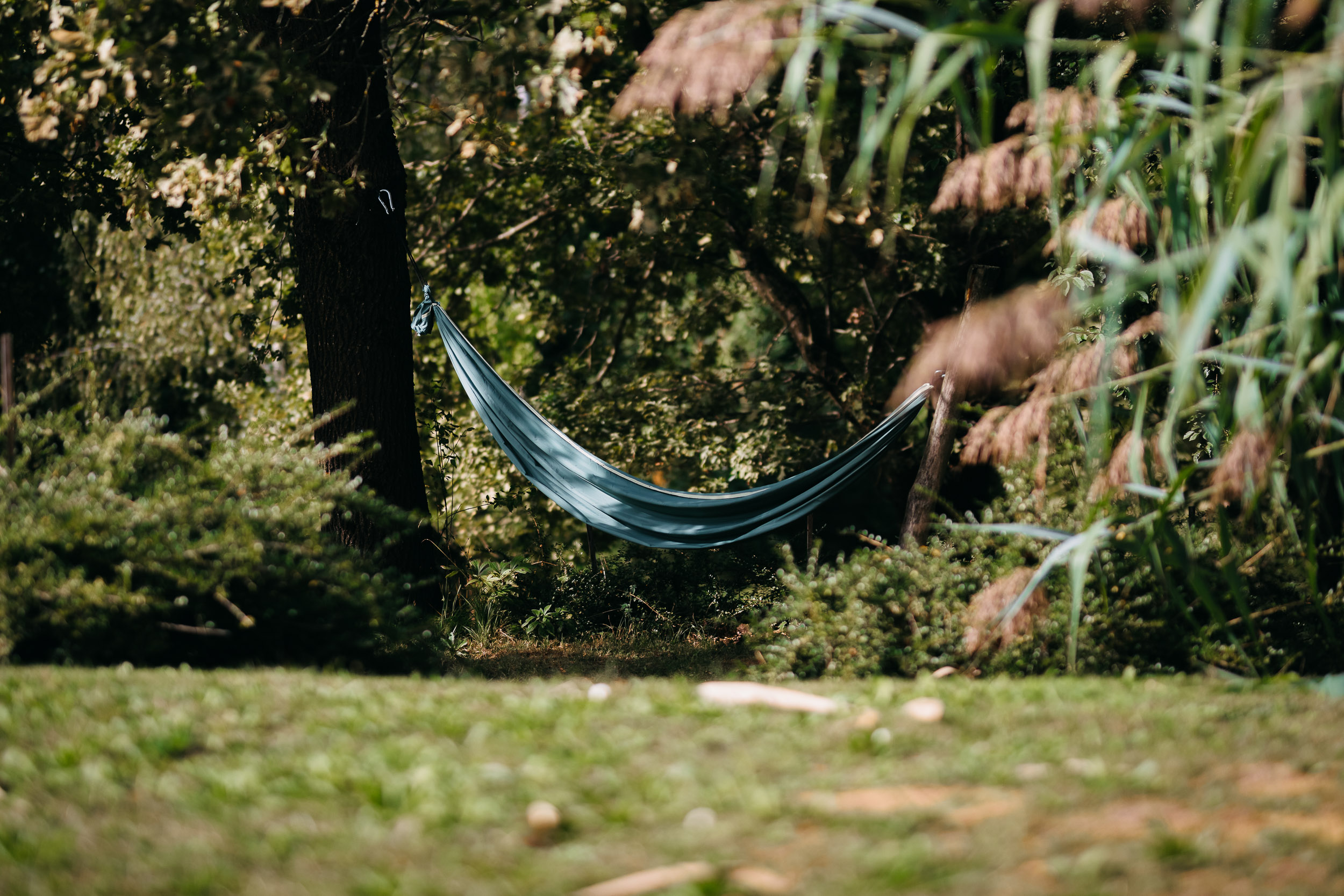
The plot around the cottage was initially very small, but I later purchased an additional section of land, so the space around Gorička Lepotička took shape gradually. When landscaping the site, my main priority was to ensure that the immediate surroundings of the cottage were well-maintained and cultivated, whilst the rest of the land remained as natural as possible. This preserves space for plants and animals and fosters greater biodiversity, rather than simply providing space for people.
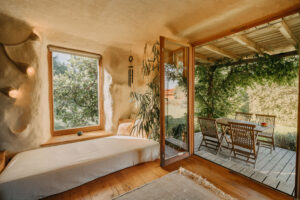
What do you find most inspiring about the Gorička region, and how is its character reflected in the house?
To me, Gorička, as a region, is gently undulating, wooded, loamy and open. What appeals to me most about it is its tranquillity. It seems to me that Gorička Lepotička also reflects this in its lines, shades, materials and the overall feel of the space. It is soft, warm and somewhat organic. I think that is exactly what the character of Gorička is like.
How do you envisage the future of Gorička Lepotička – do you have any new ideas or aspirations you’d still like to realise?
At the moment, I’m investing as much as I can in Gorička Lepotička. As I live in Ljubljana and, as someone working in the cultural sector, I’m quite busy, I don’t have much time left to bring my ideas for the cottage to life.
For many years now, I’ve been dreaming of building a sauna and a wooden platform for yoga next to Gorička Lepotička. In the future, I’d like to welcome digital nomads or artists to the cottage, who, whilst staying there as part of a residency, would devote their time to their projects and creative work.
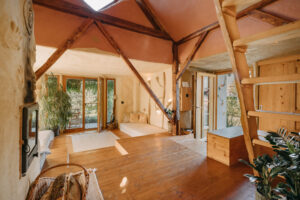
What advice would you give to someone who is thinking of setting up a tourist accommodation business and wants to create something authentic, rather than just another nice flat?
I’d say that I’m quite lucky that, in my life, I mainly create projects for myself. So, something that I later offer to others must first inspire me.
If I follow this principle, my creations will later appeal to people who follow my work or can relate to them. That’s more or less how I see the process of setting up accommodation too. So, to summarise what I’d advise someone thinking about creating an authentic accommodation, I’d say they should ask themselves two questions: what sort of flat would they create for themselves, and what sort of space would they want if they were to come and stay somewhere for a few days or weeks? I think authenticity stems primarily from the fact that a space isn’t merely the result of something modern or commercially appealing, but because there’s a personal story behind it.
What have you learnt, through creating and running your accommodation, about what guests are looking for in a holiday these days?
Guests these days are very diverse. That’s why the key decision for me was actually this question: what sort of guests do I want in my house, and what do I want to offer them?
A cottage like this might be boring to one person, but a perfect source of inspiration to another. I start from the premise that a guest who comes to a house that was once created to suit my own needs and visions – and was, in fact, my home – is at least somewhat like me.
That’s why I keep asking myself: What do I want in the house? What am I missing? What would make me happy during my stay? And, of course, what is within my capabilities as a host and what can I actually offer my guests?
I believe it’s important not to try to please everyone, but to create something you believe in yourself. Then there will be people who recognise that too.
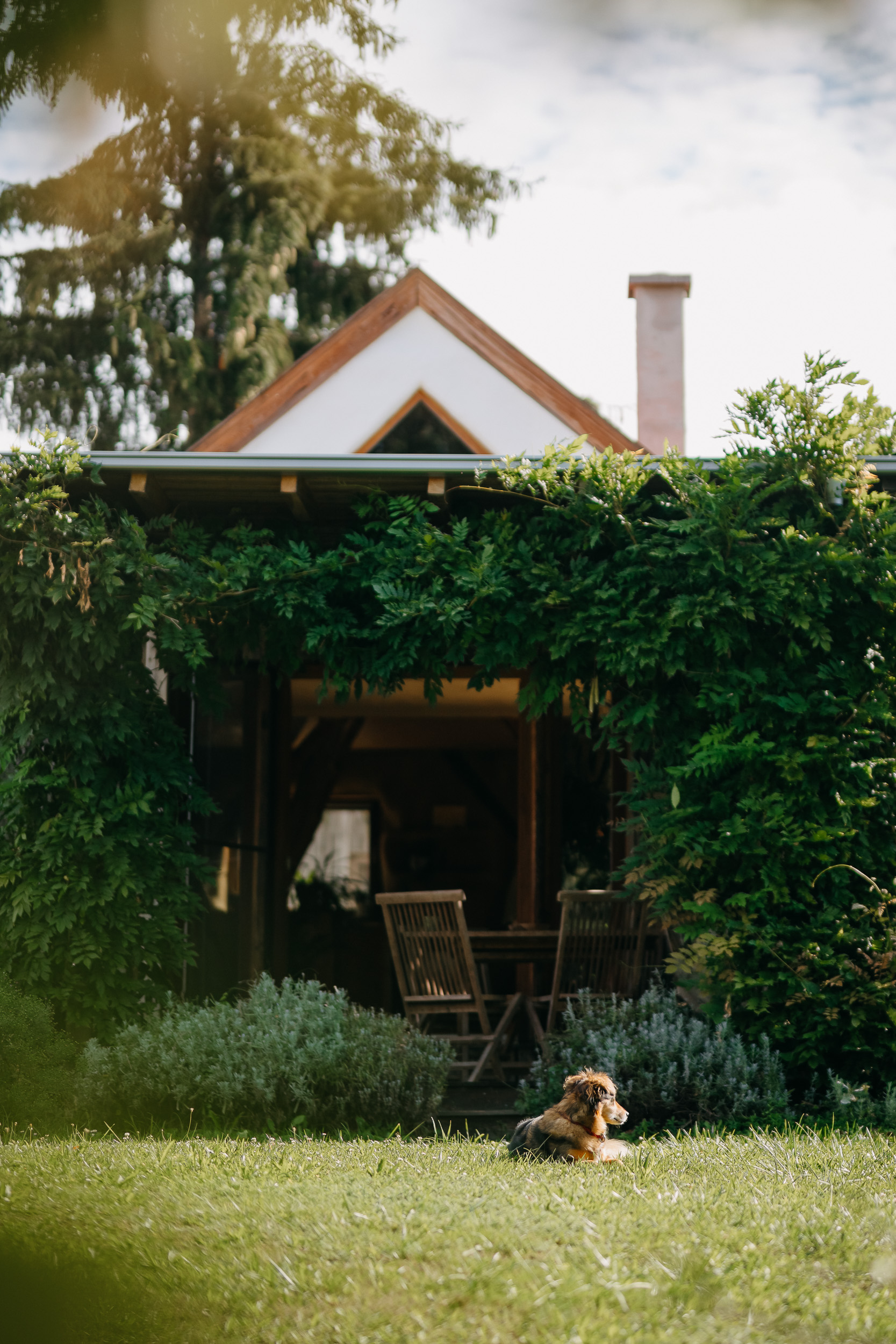
Find out more about the Goričko beauty on the website www.gorickalepoticka.si.