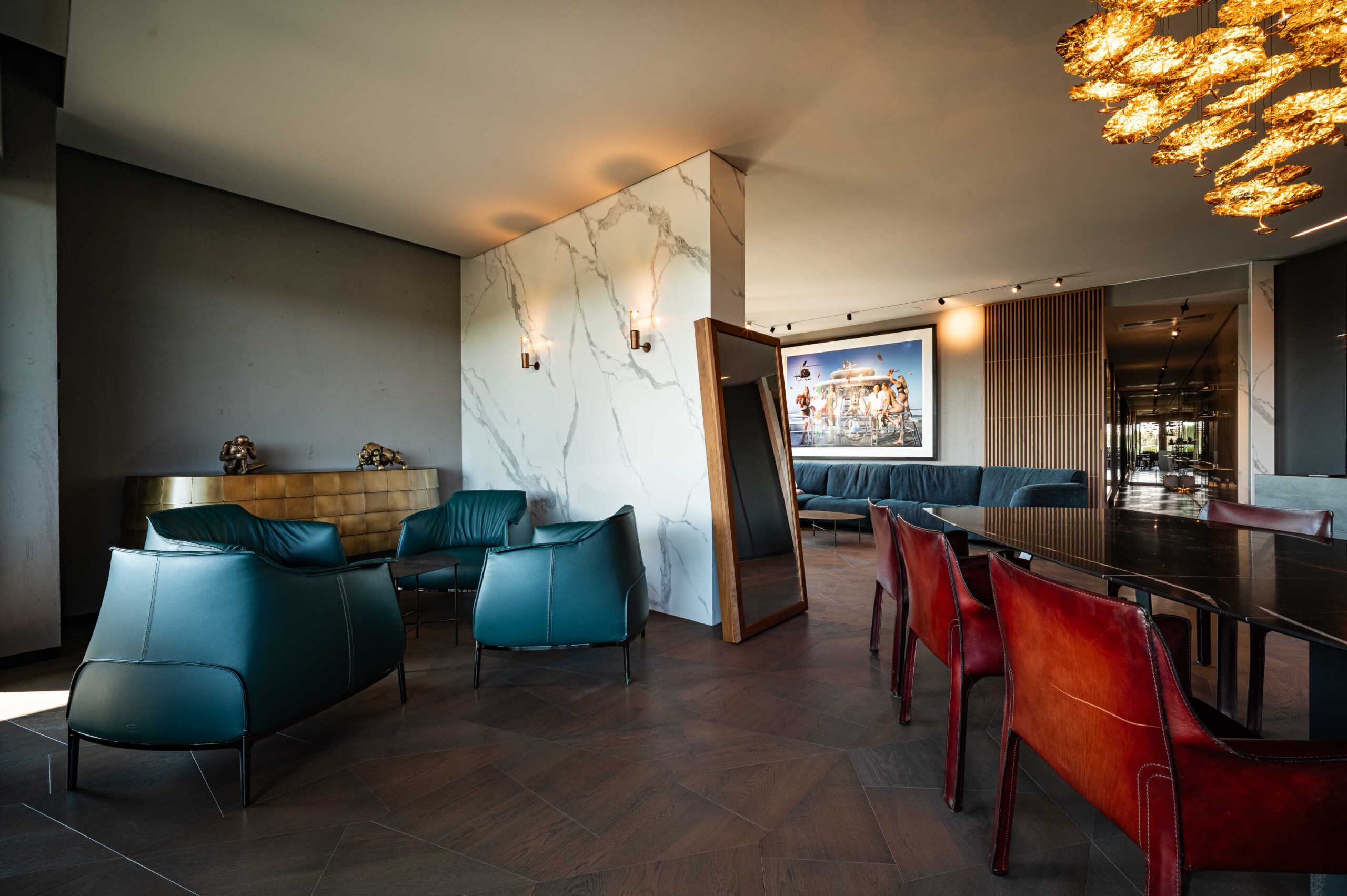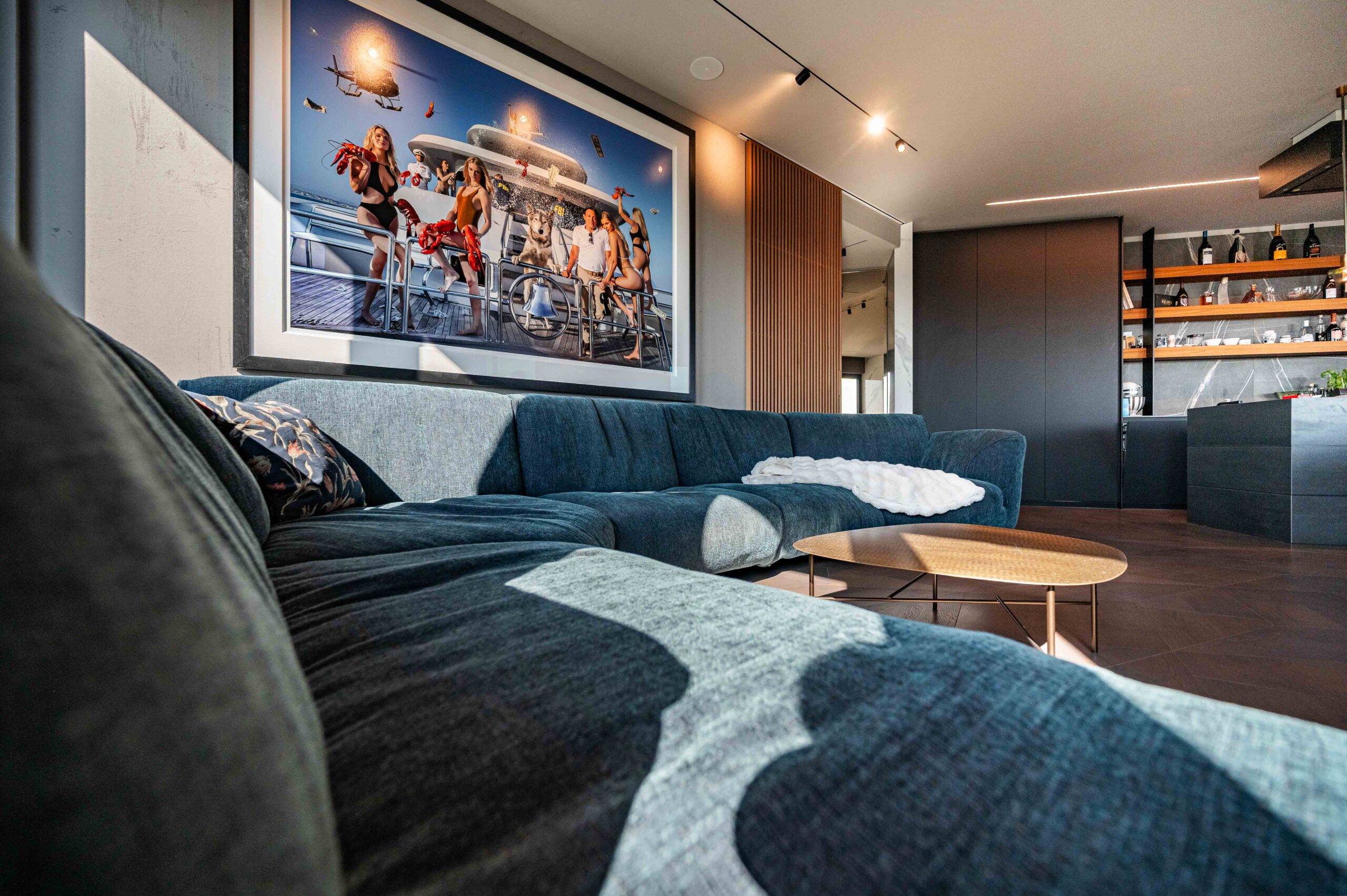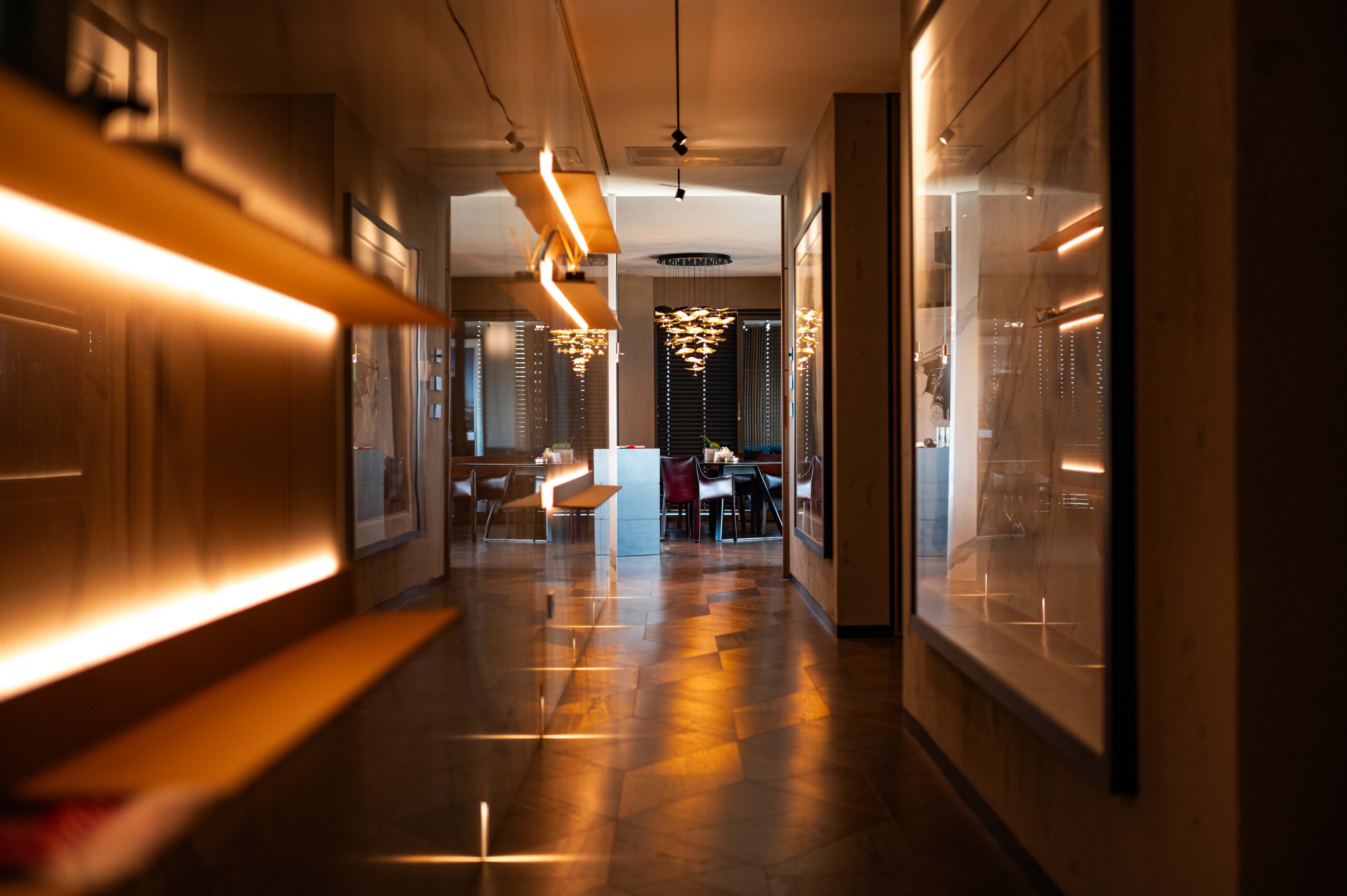
This time, we’re showcasing a unique apartment in the Eda Center office building, located in the heart of Nova Gorica. The interior design was conceived and executed by Adrijan Cingerle, founder of the architectural firm Kreadom, which provides comprehensive spatial solutions in the fields of interior design, architecture, landscape architecture, and urban planning.
The Eda Center is a commercial building in the heart of Nova Gorica, built in 2011. The center was named after the EDA aircraft of the Rusjan brothers (Edvard and Josip), which made its maiden flight in the Gorica area; a replica of the EDA aircraft in the center’s lobby serves as a reminder of this. Read on to find out who Adrijan Cingerle is and how he designed the apartment in the Eda Center.
How did your journey in architecture begin, and what drew you most to interior design?
My journey in architecture began with a fascination with space as a living organism that is constantly changing and significantly influences people’s lives. From an early age, I was interested in the relationship between built structures and nature, and the way architecture enters into this dialogue.
Interior design particularly drew me in because it represents the most intimate level of architecture—the space where architecture is actually lived. It involves direct contact with the materiality of space, with its textures, scale, and tactility. I thus understand interior design as an extension of architecture—as its most sensitive and, at the same time, most direct expression.
Has there been a project or moment in your career that has decisively shaped your approach to work?
The turning points in my career are not tied to a single project, but rather to a gradual realization that architecture is not merely design or a way of situating a building within a space.
Smaller, experimental spatial interventions in real environments have also played an important role in my personal journey. These allowed me to directly test ideas and work with basic architectural elements. It was through these experiences that I began to understand how even subtle decisions—in form, orientation, or placement—can decisively influence the character and experience of a space.
With this, architecture gradually shifted for me from the design of buildings to a process of establishing relationships, where even the less visible yet essential qualities of space become crucial.
Where did you draw inspiration for the design of the apartment in the EDA Center?
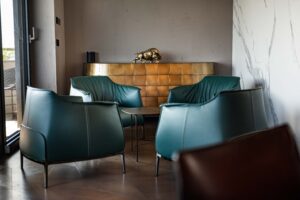
The basic premise was to create an apartment with a distinct identity of its own—specifically, an interior that functions independently of the building’s architectural concept.
Although the EDA Center, as a vertical structure, enters a modernist-designed city, this relationship is not entirely convincingly resolved. It is precisely this tension between the building and the city that became the starting point for the interior design. Such an unarticulated placement can, in the long term, contribute to the erosion of the city’s spatial identity, as it disrupts the continuity of the urban language. We designed the interior as a calm, subtly articulated environment that creates a distance from the building’s external expressiveness while simultaneously establishing a dialogue with the city and the landscape.
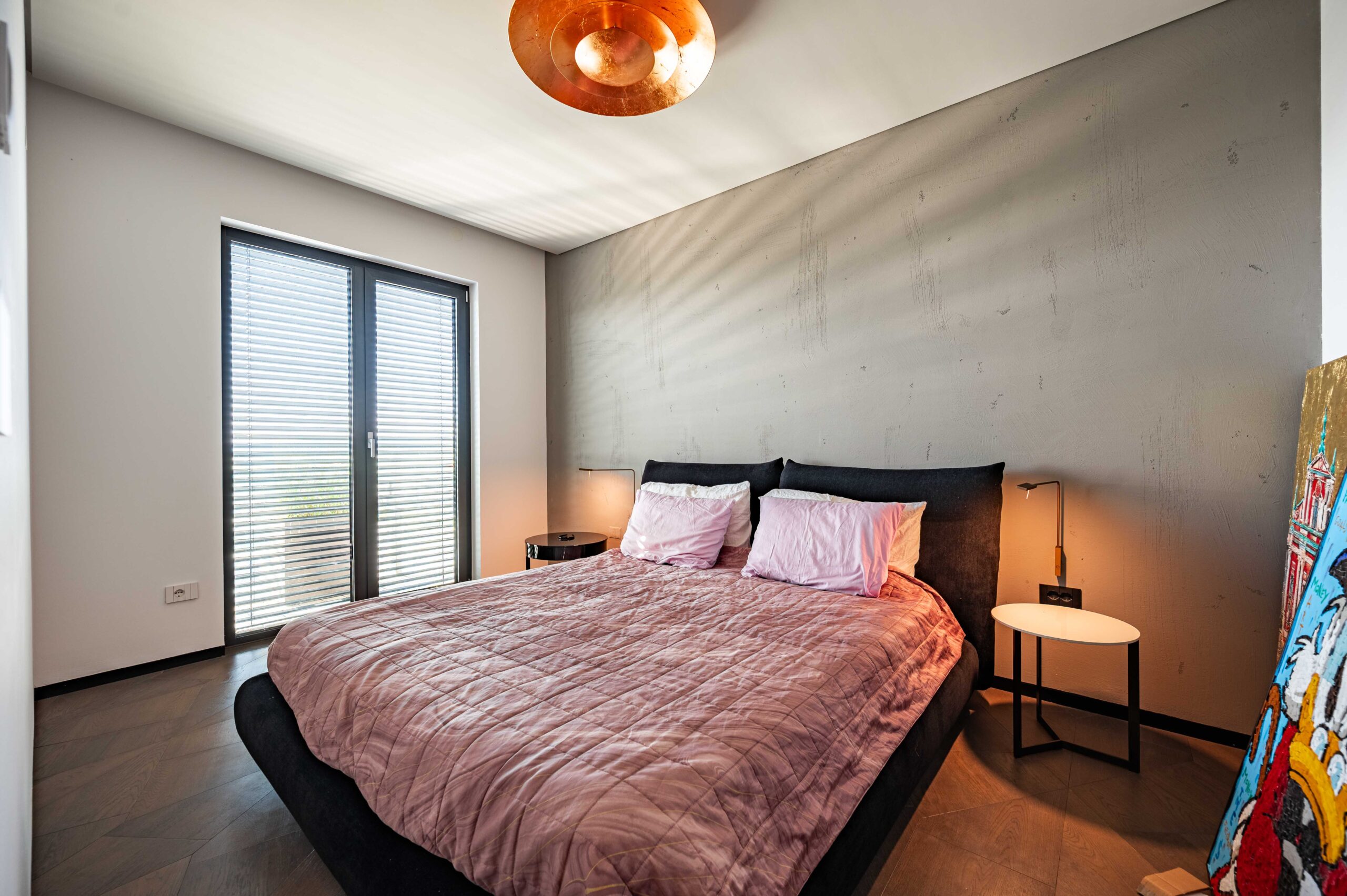
Within this framework, we also consciously developed our own geometry—including through the parquet pattern—which does not engage in a direct dialogue with the building’s geometry but instead establishes an independent internal order of the space. This decision was not accidental but crucial for stabilizing the ambience and shaping its own identity.
When you first stepped into this apartment, what did you see as its greatest potential?
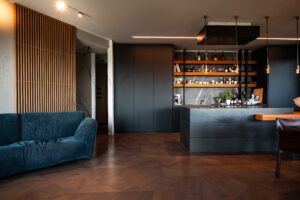
The greatest potential lay in the smaller rooms concentrated in the southern part of the apartment, which we were able to connect into a single central space with a direct connection to the terrace by removing the central wall.
Light and spatial continuity also represented key potential. The apartment had good dimensions but did not take advantage of its openness. We recognized the opportunity to transform the fragmented floor plan into a unified, fluid space where the layout reads more as a continuum than as a series of separate units.
How did you approach the choice of materials for this project, and what was key to those decisions?
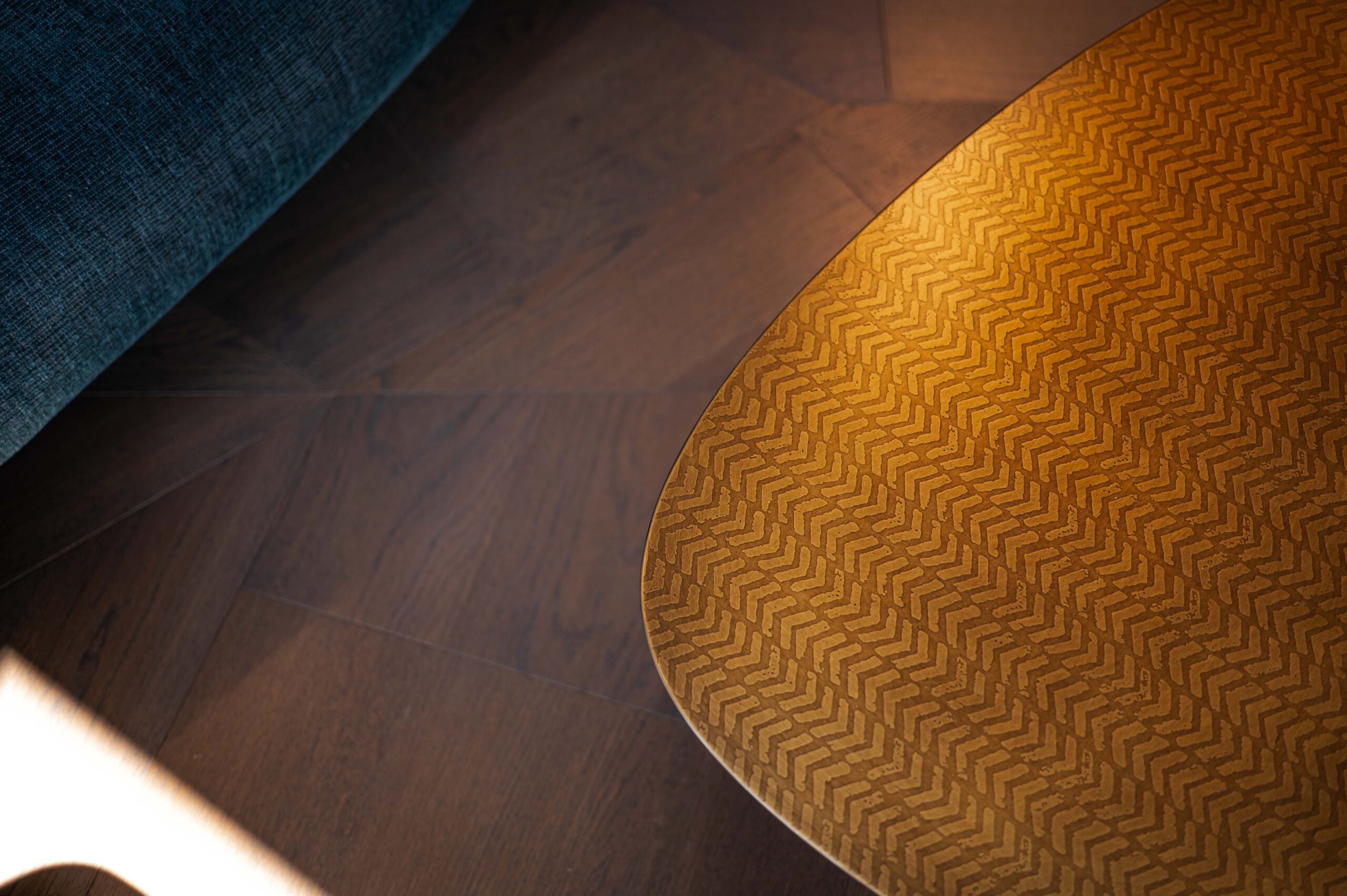
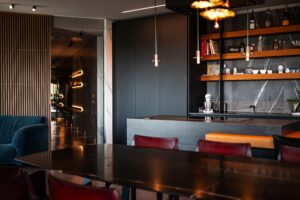
We did not view materials as a decorative layer, but rather as the fundamental medium of the space. Each material has its own weight, texture, way of aging, and relationship to light, so materiality directly shapes the atmosphere of the interior.
The combination of stone, wood, and metal was chosen to strike a balance between warmth and a certain degree of precision or understated elegance. Wood lends the space softness and a sense of livability, stone introduces mass and continuity, while metal elements create contrast and spatial definition.
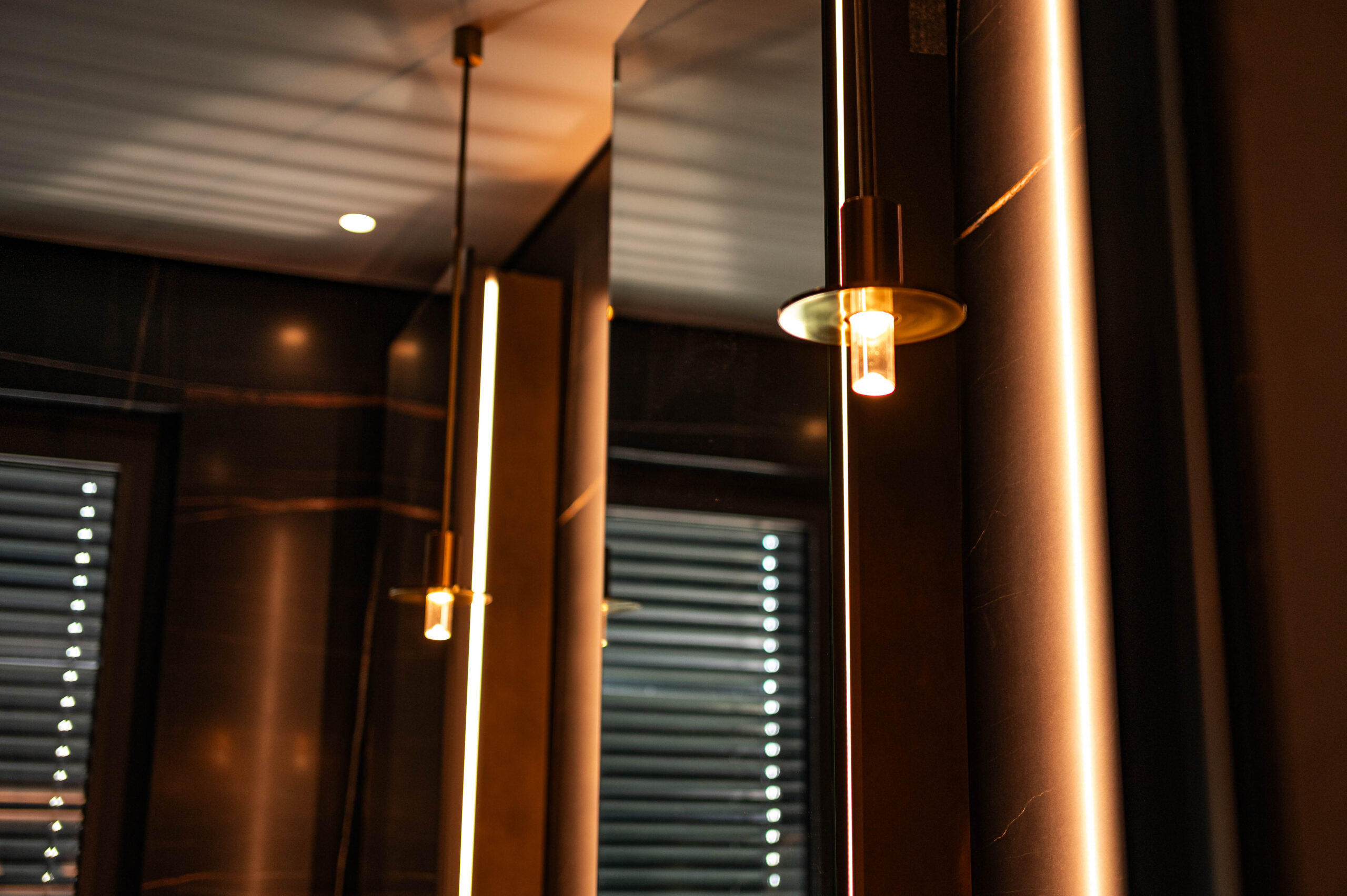
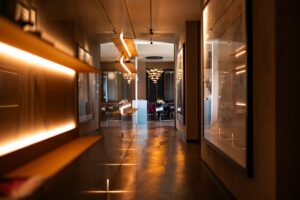
Light was also an important part of the project, as we do not perceive materials as static. Natural light changes their hues, reflections, and depth throughout the day, so the materials in the space act almost like active surfaces. We therefore sought to design the interior so that materiality is not merely a visual experience, but an atmospheric and tactile one.
What exactly is landscape architecture?
Landscape architecture is a discipline that operates at the intersection of architecture, nature, and human life. It is not merely concerned with the design of green spaces, but with understanding the relationships between space, topography, vegetation, climate, and the way space is used.
It involves designing environments that are not only aesthetically considered but also functional, atmospheric, and sustainable in the long term. Landscape architecture establishes a dialogue between the built and the natural and seeks to create spatial experiences that connect people with their environment on a more sensory level
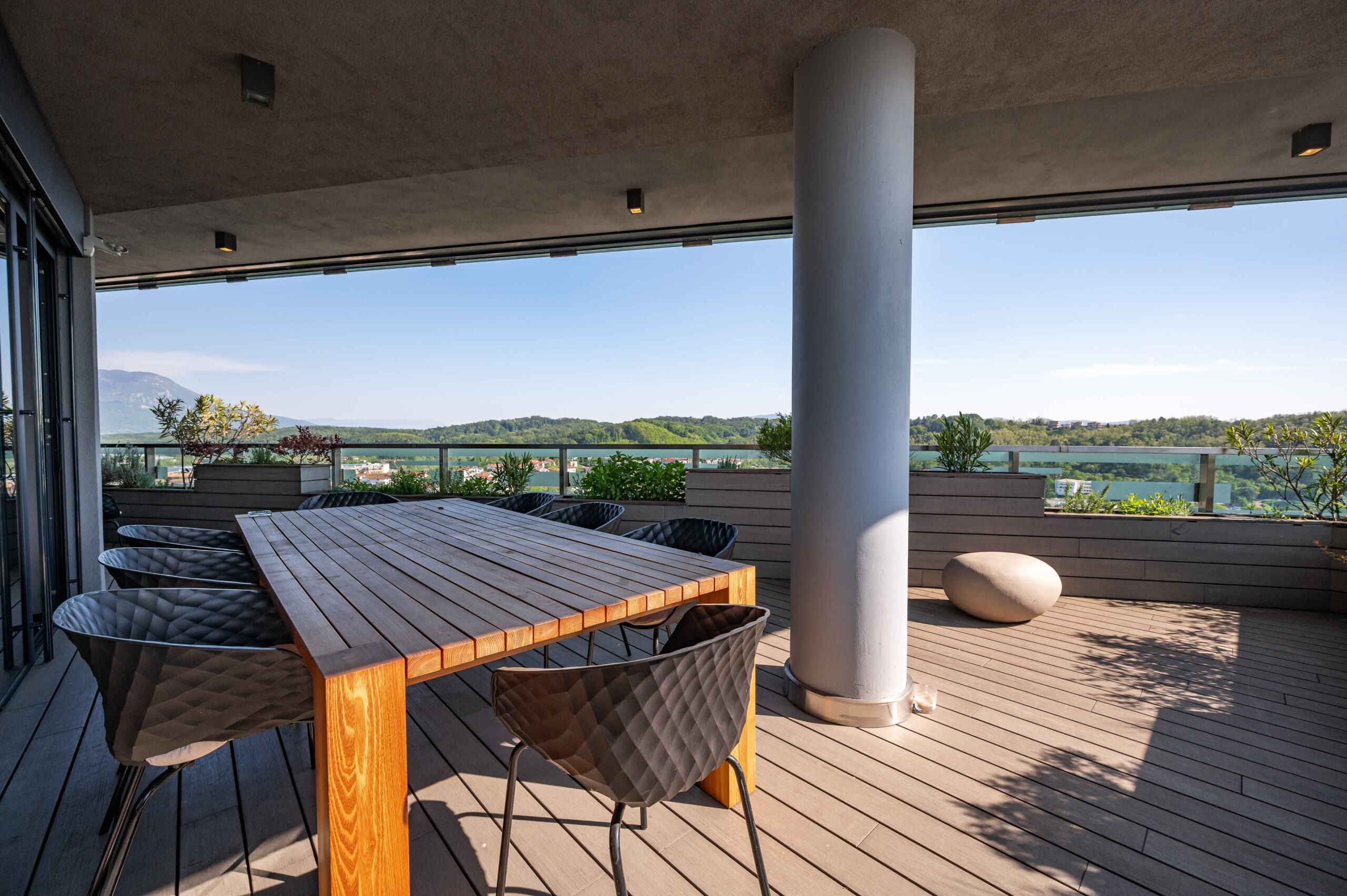
What role did the terrace play in this project, and why was it important for the green space to be so carefully designed?
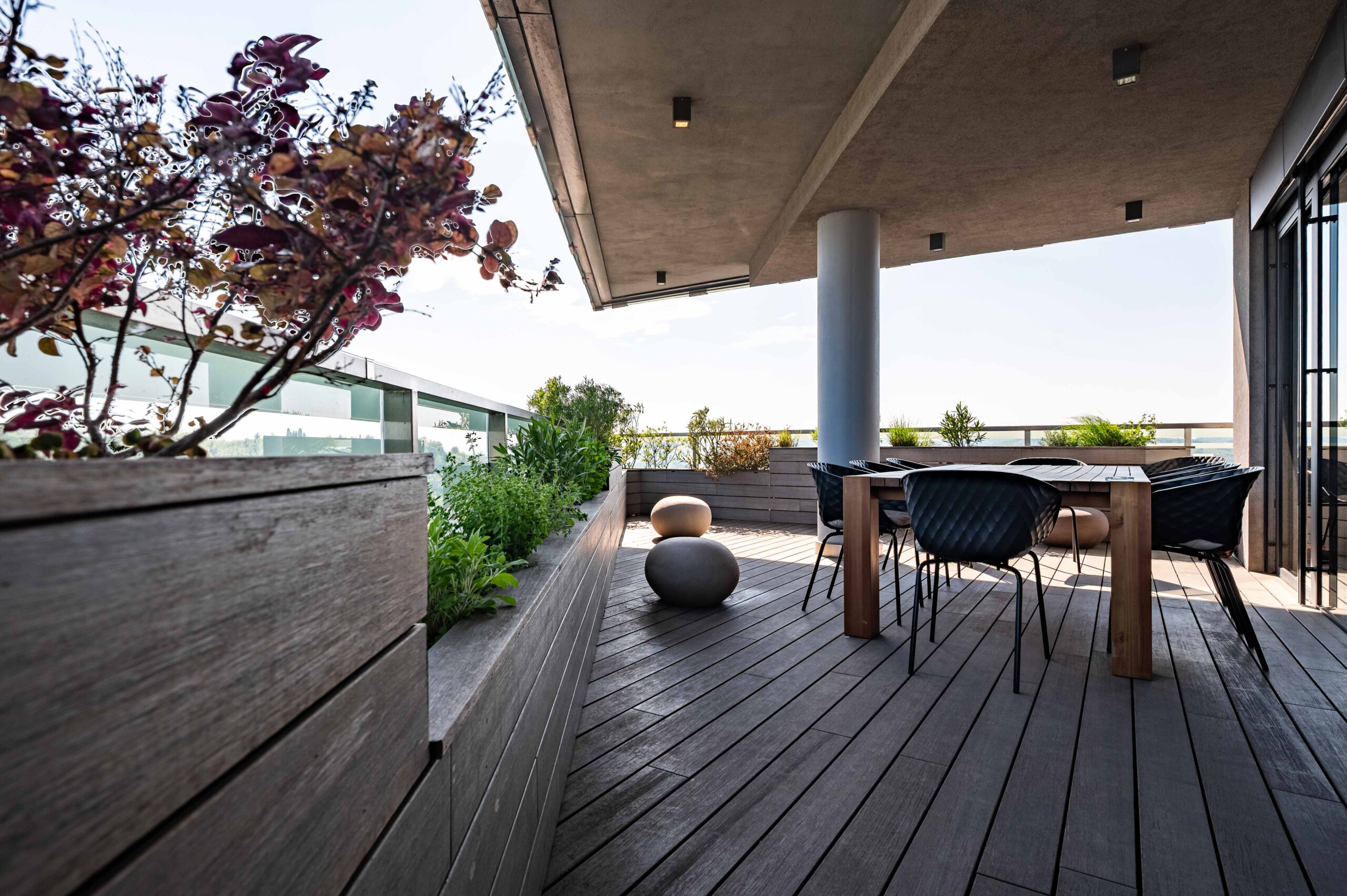
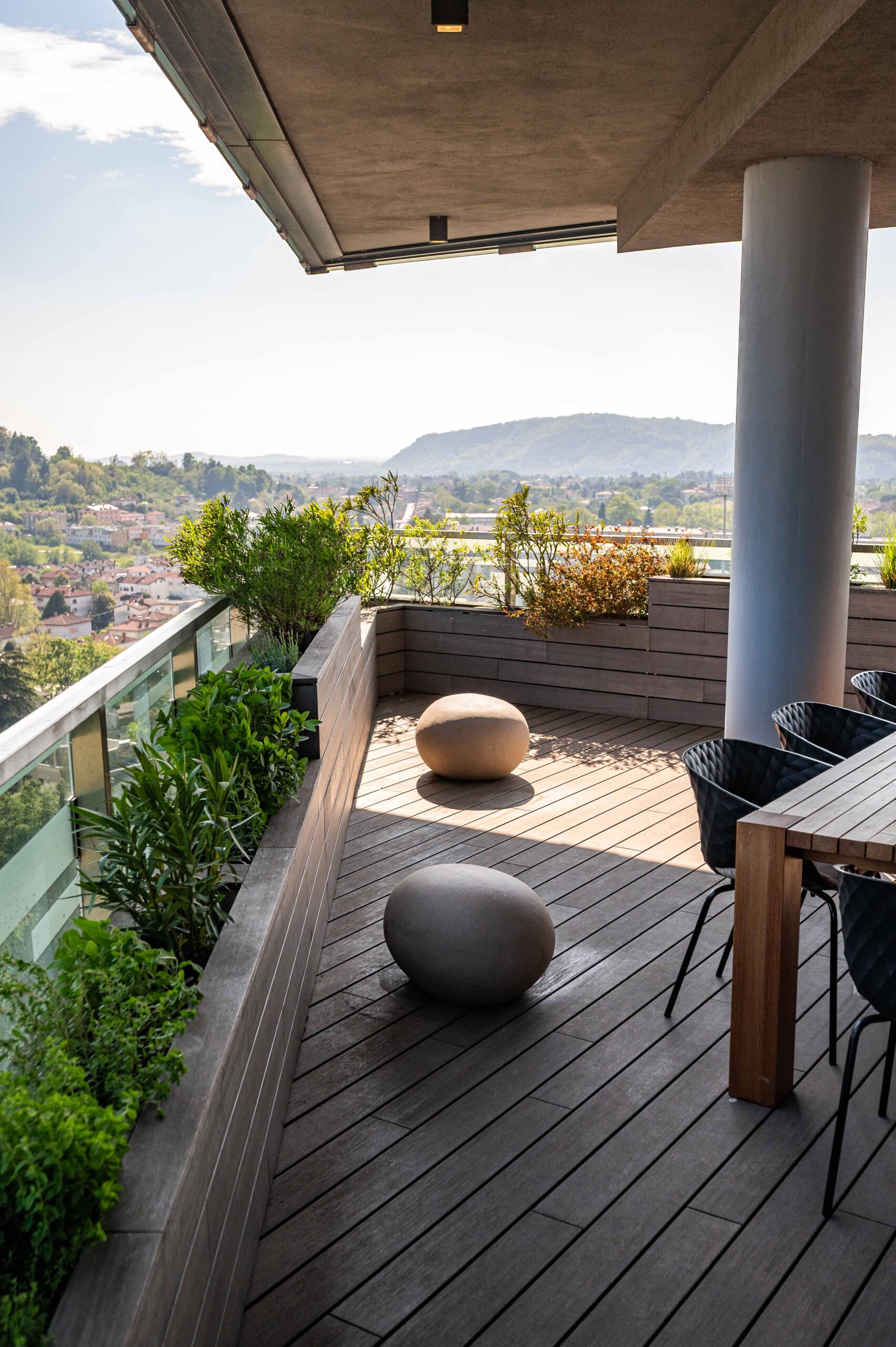
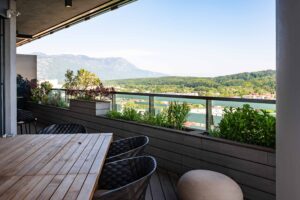
In this project, the terrace is not conceived as an additional outdoor space, but as one of the apartment’s key spatial elements. It functions as an intermediary filter between the city and the interior, as a transitional space between the urban environment and the more intimate atmosphere of home.
Its role is not merely functional, but primarily atmospheric. The planting, materials, light, and relationship to the views together create a micro-environment that fosters a sense of calm and a certain distance from the city, even though the apartment is located high above the urban fabric.
It was important that the terrace not function as a decorative addition to the architecture, but as an integral part of the spatial experience. The vegetation is therefore designed as an active element of the space—it softens the geometry, filters views, creates movement, and changes the atmosphere throughout the day and across the seasons.
What do you think is the most common mistake people make today when designing their homes?
I think that today we often don’t think enough about the space as a whole. We focus too much on individual elements, materials, pieces of furniture, trends, and visual aesthetics.
It also seems to me that the modern way of life creates a lot of visual noise, which is why we often lose touch with the fundamental qualities of a space—such as peace, quiet, materiality, natural light, and a sense of shelter. Yet it is precisely these subtle relationships that have the greatest impact on our daily well-being.
If you could give readers one piece of architectural advice for life, what would it be?
I believe that architecture has a much greater impact on people than we usually realize. What we put into our living space is, in fact, what we put into ourselves. The way we live, the light that surrounds us, the materials that accompany us, and the atmosphere we create around ourselves directly influence our thoughts, relationships, and inner state.
That is why I believe it is important to create spaces that are not merely functional or visually appealing, but above all designed for living.